
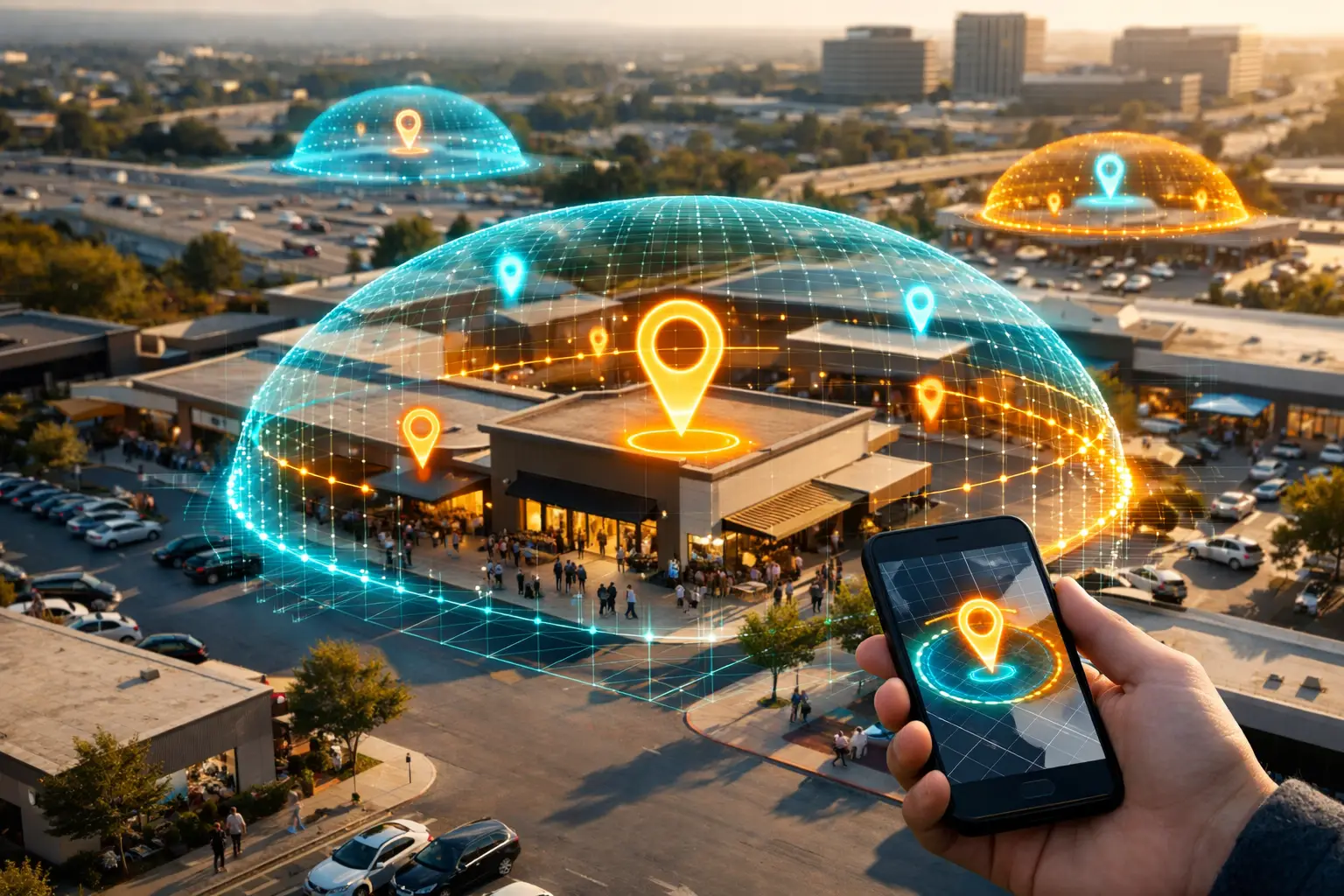

Most geofencing campaigns fail for a simple reason: the targeting sounds precise, but the strategy is lazy. If you are looking for the best geofencing campaign ideas, start by thinking less about broad areas and more about real-world intent and your customer’s buying cycle. The strongest geofencing campaigns are built around specific places people actually visit and what that visit says about what they may do next.
That matters because geofencing is not just local targeting with a fancier label. Done well, it lets you reach people based on where they have physically been at a more precise level – a competitor storefront, an event venue, an apartment complex, a medical office, a dealership, even a section of a campus. Done poorly, it turns into wasted impressions and vague reporting. The gap between those two outcomes is campaign design.
What makes the best geofencing campaign ideas work
The best geofencing campaign ideas share three traits. First, they are tied to a real business goal, not just awareness for awareness’s sake. Second, they use tight location selection instead of oversized geographic areas. Third, they match the offer and creative to the context of the visit.
If someone visited a competing gym, your message should not look like a generic brand ad. It should give that person a reason to compare, switch, or try you. You know you are targeting gym goers that you want to switch, not non-gym goers you are convincing to start, so the message can and should be more specific to that audience. If someone attended an expo, your ad can connect directly to that event interest. Geofencing works well when the location itself becomes the targeting signal.
1. Competitor conquest campaigns
This is one of the most reliable uses of geofencing because the intent is easy to understand. If someone visited a competitor location, they are most likely in-market for that product or service category. That does not guarantee they are ready to switch, but it does mean your ads start from relevance.
An auto dealership can geofence nearby lots and promote a new monthly special. A furniture store can target shoppers who visited another showroom. A spa can reach people who recently visited competing locations that have lower Google rating (and you can mention your better reviews in your creative). The key is to avoid weak copy. “We are better” is forgettable. A stronger angle is faster booking, a clearer offer, financing, sales, examples of superiority, or a convenience advantage.
This approach works especially well for businesses with repeat purchase cycles or high customer value. If your average customer is worth a lot over time, paying to win a competitor’s visitor is often justified.
2. Event attendee retargeting
Events create concentrated intent, which is why this is one of the best campaign types for B2B and local consumer brands alike. Instead of sponsoring everything in sight, you can geofence the venue and retarget attendees after they leave.
That could mean a roofing company targeting home improvement expo attendees, a software firm reaching trade show visitors, or a restaurant promoting itself to people who attended a local festival nearby. The timing matters here. Interest is strongest shortly after the event, so your campaign should launch fast and run with enough frequency to stay visible without becoming repetitive.
There is also a useful trade-off to understand. Big events bring volume, but they can also bring noise if the audience is broad. Smaller niche events often produce fewer impressions but better quality traffic.
3. Neighborhood and residential complex targeting
For service businesses, this is often better than broader city targeting because it reflects where your ideal customers actually live and where you are currently working/want to work. Pest control, landscaping, cleaning services, home remodeling, internet providers, and moving companies can all benefit from targeting specific neighborhoods, apartment communities, condo buildings, or new housing developments.
The idea is simple: if you know where your best customers are concentrated, advertise to people who have physically visited or live around those exact places. Pair that with messaging that fits the setting. A luxury apartment campaign can benefit from different creative than a suburban single-family neighborhood campaign.
This is also a strong play for businesses opening a new location. Before launch, you can build awareness among nearby residential audiences without paying for a lot of wasted impressions outside your actual trade area.
4. Multi-location store support
Franchise groups and regional brands can struggle with local relevance. National creative may be polished, but it rarely reflects what drives action at the store level. Geofencing can help that by supporting each location with its own surrounding target zones, competitor sets, localized creative, and conversion tracking.
A fitness franchise can run one strategy near urban locations and another near suburban centers. A QSR brand can target nearby office buildings for lunch traffic and residential pockets for dinner. A furniture chain can promote different inventory by market. The advantage is control. You do not have to buy broad local media and hope people close enough happen to see it.
This is where self-serve execution becomes valuable. If you have multiple locations, waiting on a managed-service vendor for every update gets old fast. Local campaigns work better when marketers can adjust creative, budgets, and target locations in real time.
5. Open house and model home follow-up
Real estate and home services have a natural fit with geofencing because buyer intent often shows up physically before it shows up in a form fill. If someone toured a model home community, visited an open house, or attended a local homebuilder event, they are signaling active interest.
Agents, builders, mortgage lenders, flooring companies, and insurance providers can all build campaigns around those visits. The offer should match the stage of the journey. Someone just starting to browse may respond to neighborhood guides or financing options. Someone visiting multiple communities may need an incentive to book a private showing or compare floor plans.
This type of campaign usually performs best when paired with strong landing pages and clear next steps. Location-based targeting gets attention, but conversion still depends on what happens after the click.
6. Campus and workforce campaigns
Some businesses need to reach people based on where they study or work, not just where they shop. Trade schools, universities, industrial parks, office towers, and distribution centers can all act as valuable location signals depending on your offer.
A nearby apartment property can target students around a campus. A lunch spot can target office workers in a specific business district. A staffing firm can reach people visiting warehouses or manufacturing facilities. A continuing education provider can target professionals near campuses.
The lesson here is that geofencing is not just for retail. If location reflects identity, routine, or need, it can be a useful targeting input.
7. Seasonal and event-triggered local pushes
Some of the best geofencing campaign ideas are temporary by design. Tax firms during tax season, party supply stores during graduation season, HVAC companies during heat waves, and retailers during holiday shopping periods all benefit from sharp, time-sensitive campaigns.
What makes these work is urgency plus precision. Instead of increasing spend everywhere, focus on the places most likely to produce action right now. That might be competitor tax offices, graduation venues, home improvement stores, or shopping centers.
Short campaigns also give you a cleaner test environment. You can compare creative, offers, and conversion zones quickly and keep what works.
8. Cross-device follow-up for longer consideration cycles
Not every conversion happens on a phone right after a location visit. For higher-value purchases, people often research later on a laptop, stream content on connected TV, or continue browsing across devices. That is why one of the smartest campaign ideas is not just geofencing the visit, but extending your message beyond the moment.
This matters for auto dealers, legal services, healthcare providers, education brands, home services, and B2B advertisers. The visit creates the audience. The follow-up across display, video, audio, or CTV helps you stay present while the buyer compares options.
It is also a reminder that geofencing should not be treated as a standalone trick. It is a way to build a stronger audience for broader digital advertising.
How to choose the right geofencing campaign idea
The right campaign depends on what your business actually needs. If you need leads fast, competitor conquesting or event retargeting may be the fastest path. If you need local awareness for a new location, residential or store-surround campaigns may fit better. If your sales cycle is longer, cross-device follow-up is usually worth the extra planning.
Keep your audience tight. Choose places with a clear connection to buying intent. Match the creative to the visit context. And make sure you define success before launch, whether that means store visits, lead forms, calls, booked appointments, or traffic into a conversion zone.
This is where many advertisers overcomplicate things. You do not need a bloated media plan or a vendor hiding basic controls behind a sales process. You need location logic, strong creative, and the ability to adjust quickly when the data starts coming in. That is why platforms like Qujam appeal to marketers who want the precision of geofencing without the usual friction.
The best geofencing campaigns are not built around bigger maps. They are built around better intent. Start there, and your ads stop feeling like guesses.


