
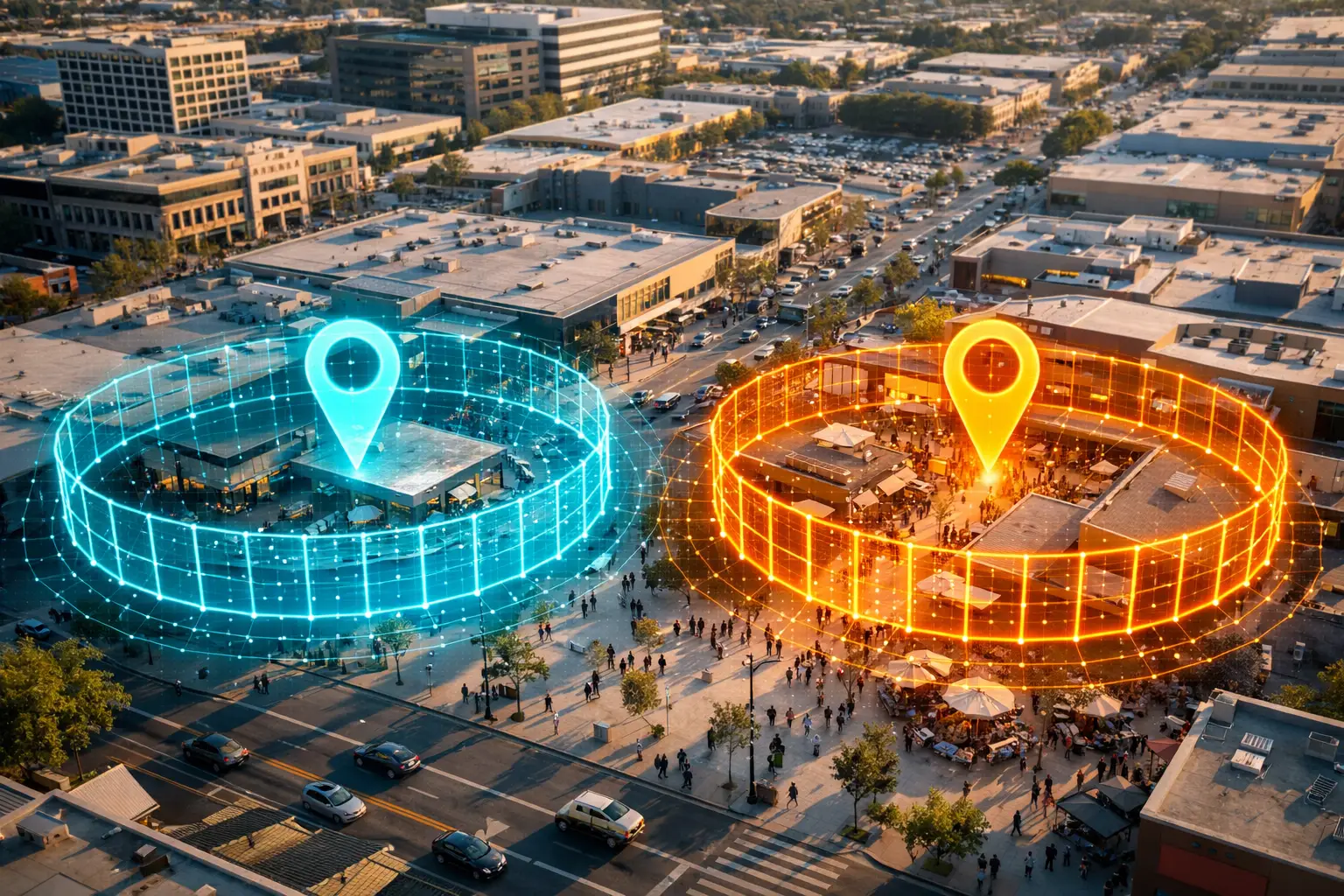

If you have ever asked a geofencing vendor for pricing and ended up on a sales call three days later, you already know the problem. A self serve geofencing platform is supposed to make location-based advertising easier, not wrap it in delays, minimums, and vague promises.
That matters because geofencing works best when marketers can move fast. You might want to target people who visited a competitor last month, build a campaign around a live event this week, or push a local offer into a specific service area by Friday. If every change requires emailing an account rep, the channel becomes harder to use than it should be. The whole point of self-serve is control.
What a self serve geofencing platform actually means
A true self-serve platform gives advertisers direct access to campaign setup, audience targeting, budget controls, reporting, and optimization. You log in, build your audience, launch your ads, and track performance without waiting for someone else to push the buttons.
That sounds simple, but plenty of platforms use the term loosely. Some offer a dashboard but still gate key steps behind a managed-service team. Others let you submit a campaign request, then treat self-serve as a nicer intake form. That is not the same as having real control.
For small businesses, agencies, franchise groups, and local marketing teams, that distinction is a big deal. If you are running multiple locations or juggling campaigns across different markets, speed and visibility are not nice-to-have features. They are the difference between a useful ad platform and an expensive bottleneck.
Why businesses are moving to a self serve geofencing platform
The old model in geofencing has some familiar problems. High minimums shut out smaller advertisers. Slow setup makes timely campaigns harder to execute. Reporting can be thin, delayed, or too polished to answer practical questions. And if pricing is tied to a custom proposal every time, planning becomes harder than it needs to be.
A self serve geofencing platform fixes a lot of that by putting campaign execution closer to the advertiser. You can test a market without committing to a large spend. You can adjust budget, creative, or targeting when performance changes. You can see what is happening without waiting for a monthly wrap-up.
That does not mean self-serve is automatically better in every case. Some large campaigns still benefit from extra hands-on strategy, especially around major events or multi-market rollouts. But most advertisers do not need more friction. They need more access.
The features that matter most
The best platforms are not the ones with the longest feature list. They are the ones that make the important tasks easy and visible.
Audience creation is the first test. You should be able to geofence addresses, competitor locations, event venues, neighborhoods, zip codes, and service areas without getting stuck in a technical workflow. If location targeting feels confusing at the setup stage, it usually does not get better later.
The next piece is device reach. Geofencing is not just about serving a banner ad to a phone that crossed a boundary. Strong platforms let advertisers reach users across connected devices, including mobile, desktop, tablet, and TV where appropriate. That broader delivery can help turn a location audience into a real campaign strategy instead of a one-format tactic.
Reporting is another place where weak platforms get exposed. You should be able to see delivery, pacing, engagement, and conversion activity in a way that makes campaign decisions easier. If the dashboard only tells you impressions and clicks without tying them to business outcomes, the platform is leaving too much work to the advertiser.
Then there is setup speed. A self-serve product should not feel like enterprise software built for specialists only. Marketers should be able to fund an account, build a campaign, and launch without a long onboarding process. That is especially important for smaller teams that do not have dedicated ad ops support.
What to watch for when comparing platforms
A lot of geofencing products claim simplicity while keeping the hardest parts hidden. So it helps to look past the homepage language and ask practical questions.
Can you launch without speaking to sales? Can you pay by credit card? Can you edit campaigns in real time? Can you build your own geofences and conversion zones? Can you access reporting whenever you want? If the answer to several of those is no, you may be looking at a managed-service platform with a self-serve label.
Pricing is another clue. High minimums often signal an operating model built around sales efficiency, not advertiser flexibility. That does not make the platform bad, but it may make it a poor fit for a business that wants to test, learn, and scale on its own terms.
It also helps to look at the ad inventory itself. Some platforms talk a lot about geofencing but offer limited media options once the audience is built. A better approach is to support multiple formats, such as display, CTV, OTT, video pre-roll, and digital audio, so the targeting can be applied in ways that match the campaign goal.
Who benefits most from self-serve geofencing
This model works especially well for advertisers that need local precision without enterprise complexity. A home services company can target neighborhoods inside a defined service area. A franchise group can run separate campaigns around each location. An agency can build competitor conquesting campaigns for several clients without waiting on a rep every time a market changes.
It is also a strong fit for event marketers. If a trade show, concert, festival, or sports event has a clear footprint and a defined date range, geofencing can turn that physical attendance into a targetable audience. The value of self-serve here is obvious. Event windows are short, and delays cost opportunity.
That said, some advertisers need more support at the beginning. First-time users may benefit from guided setup, creative help, or education around audience sizing and budget expectations. The best platforms do not force managed service, but they also do not leave newer users stranded.
How a good self serve geofencing platform improves ROI
Better ROI usually comes from reducing waste, not from some magic targeting trick. Geofencing helps by narrowing the audience to people with a real-world behavioral signal. They visited a competitor. They attended a specific event. They were present in a local trade area that matters to your business.
A self-serve platform adds another efficiency layer because it lets advertisers act on that signal quickly. You can pause weak creative, shift budget to better-performing markets, or tighten your targeting if audience quality drops. Those adjustments matter. Campaign performance is rarely static.
Transparency also helps. When reporting is live and easy to read, marketers can catch problems earlier. Maybe delivery is pacing too slowly. Maybe one location is outperforming the others. Maybe a conversion zone is too broad to be useful. With direct access, those become fixable issues instead of mysteries buried in a later report.
Where self-serve can fall short
Self-serve is not a shortcut around strategy. If your offer is weak, your creative misses the mark, or your audience is too broad, the platform alone will not save the campaign. Control is useful, but only if you use it well.
There is also a learning curve. Advertisers still need to understand geography, audience size, budget pacing, and what success should look like for the campaign. A platform can make those decisions easier, but it cannot make them for you.
That is why the strongest option is usually a self-serve product with optional support. You keep direct control, but you can still get help when a campaign is unusually complex or time-sensitive. That balance is where platforms like Qujam stand out. They remove the usual friction without removing access to expertise when it actually helps.
The standard should be higher
A self serve geofencing platform should not feel like a favor from a vendor. It should feel like software built for advertisers who want to move. You should be able to target the right locations, launch on your schedule, monitor results clearly, and make changes without asking permission.
That is not a premium experience anymore. It is the baseline marketers should expect.
If a platform still makes geofencing feel slow, expensive, or opaque, the problem is not the channel. It is the platform. Choose one that gives you the controls you need and gets out of the way so you can actually advertise.


