
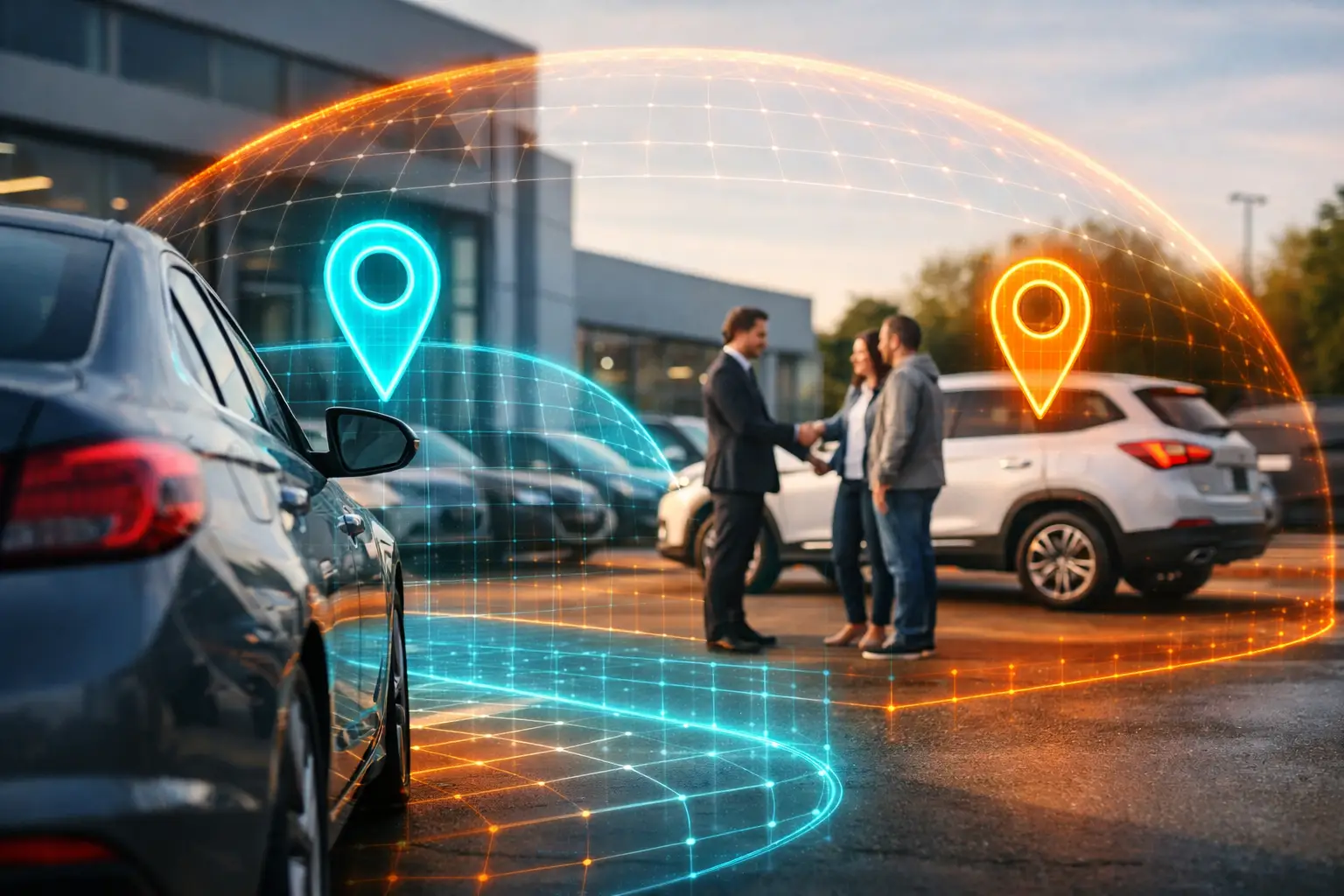

Saturday traffic looks strong, the sales floor is staffed, and the same thing is happening at your competitors’ lots as well. That is exactly why geofencing for car dealerships continues to be a valuable targeting tactic. When it is set up well, it lets you reach shoppers based on where they have actually been, not just broad assumptions about who might be in market.
For dealerships, that matters. Most buyers do not move from seeing one generic ad to walking onto your lot. They compare stores, visit competitor locations, research service options, attend local events, are taking their car into a repair shop one last time, and bounce between devices before taking action. Geofencing gives you a way to stay in front of those real-world shoppers with much less waste.
What geofencing for car dealerships actually does
At its core, geofencing uses tightly drawn virtual boundaries around real places. When someone enters or has visited one of those locations, they can be added to an audience for later ad delivery across devices such as smartphones, tablets, desktops, and connected TVs.
That sounds simple, but the big distinction is where advertisers can get tripped up. Good geofencing is not just dropping a radius around a city and calling it local targeting. For dealerships, the value comes from precision. You want to target the actual competitor lot, the auto mall across town, the service center, the county fair, the RV show, or the neighborhood where your ideal buyers live. Broad geography creates broad waste.
A dealership can use geofencing to conquest shoppers from nearby competitors, re-engage people who visited its own lot but did not convert, promote fixed ops to owners in the right service areas, or build awareness around model-specific campaigns tied to local events. The technology is flexible. The strategy is where the results are won or lost.
Where dealerships usually get the best results
The strongest geofencing campaigns usually start with one clear business goal. Trying to sell new trucks, grow used inventory leads, move service appointments, and boost brand awareness in one campaign often produces muddy results.
For variable ops, competitor conquesting is the obvious use case. If a shopper visited two or three rival dealerships in the last few weeks, that person is giving off a strong buying signal. A well-timed ad with the right offer, inventory angle, or financing message can put your store back into the consideration set.
For fixed ops, geofencing can work especially well around competitor service centers, quick lube chains, tire shops, and neighborhoods within a practical drive time. The messaging can be more direct here because the decision cycle is shorter. Oil changes, brake service, tires, and seasonal maintenance do not require the same level of research as a vehicle purchase.
Event targeting is another practical play. Auto shows, county fairs, home shows, and community events can attract exactly the kind of local audience a dealership wants. But this only works if the event audience matches your inventory and pricing. A luxury store and a value-focused used car lot should not geofence the same events with the same expectations.
Why precision sometimes matters more than reach
A common mistake in dealership advertising can be chasing scale too early. Bigger audience numbers can look impressive in a dashboard, but large audiences are often full of weak intent. If your geofence includes every shopping center, every major road, and half the zip code, you are paying for volume, not relevance.
Precision changes that. A tightly drawn audience based on actual competitor visits or meaningful local behaviors is usually smaller, but more valuable. That often leads to better frequency control, stronger message relevance, and cleaner reporting.
This is where some advertising options sell the idea of location targeting, then push broad boundaries, high minimums, vague reporting, or managed-service setups that slow everything down. Dealerships do not need more friction. They need a campaign they can launch quickly, adjust in real time, and judge by actual performance.
It is important to have enough reach (reaching enough people) to be successful, but reaching too many of the wrong people can really hurt a campaign.
How to build a geofencing campaign that works
The practical path is straightforward, but the details matter.
Start with one location strategy
Pick the audience first, not the ad format. Are you targeting shoppers who visited a competitor lot? Past visitors to your own dealership? People at a local event? Drivers near your service area? Each one needs its own campaign structure and message.
If you start with too many locations at once, you will not know what is driving results. A competitor campaign and an event campaign may both generate impressions, but they are different audiences with different intent levels.
Match creative to the shopper’s context
This is where many dealership campaigns go flat. If someone visited a competing Ford store and your ad says only Visit Our Dealership Today, it is missing the moment. If your service ad targets people near tire shops but promotes a vague seasonal special, it loses urgency.
The ad should reflect why the audience was chosen in the first place. Better examples include trade-in messaging for competitor visitors, inventory-specific offers for in-market shoppers, and quick-turn service offers for fixed ops audiences. Specificity usually beats polish.
Use more than one channel
Display ads are often the starting point, and they still matter. But dealerships should think beyond one format. Video pre-roll can help with inventory storytelling, connected TV can reinforce local brand presence in the home, and digital audio can add frequency during commute hours.
Not every campaign needs every channel. A small service campaign may do well with display alone. A larger rooftop campaign built around model launches or aggressive monthly sales goals may benefit from a more layered approach.
Set up conversion tracking before launch
If the only metric you watch is clicks, you will undervalue geofencing. Many dealership shoppers see ads on one device and visit later without clicking. Conversion zones and visitation tracking can help connect ad exposure to physical visits, which is much closer to how dealerships actually sell.
That said, store visits are not the only success metric. Form fills, calls, map opens, and inventory page engagement may all matter depending on the campaign goal. The right KPI depends on whether you are driving top-of-funnel awareness, active shopping behavior, or service appointments.
Trade-offs dealerships should understand
Geofencing is powerful, but it is not magic.
First, it works best when there is enough movement through the locations you target. If you geofence a low-traffic competitor or a tiny event, audience size may be limited. Precision is valuable, but not if it leaves you with too little scale to learn anything useful.
Second, creative still matters. A sharp audience cannot save a weak offer or generic messaging. If your pricing is uncompetitive or your ad says nothing distinct, geofencing will not solve that.
Third, timing matters. Vehicle purchases often involve longer consideration windows than service promotions. A dealership pushing new inventory may need a longer campaign duration and more layered retargeting than a store promoting brake specials or tire deals.
Fourth, it’s often most effective when part of a solid, holistic marketing and sales strategy. Like all advertising, it’s always stronger when it’s part of a larger plan.
Finally, reporting should be clear enough to support decisions. If a vendor cannot show where audiences came from, how campaigns are pacing, and what outcomes are being recorded, you are flying blind. That is one reason self-serve platforms have become more attractive. They give marketers and dealers more control without waiting on an account manager to pull basic data.
What to look for in a geofencing platform
The best setup for most dealerships is one that removes operational drag. You should be able to define precise locations, launch quickly, control spend, access reporting without delay, and make changes when inventory or priorities shift.
You also want support for multiple media types, not because every campaign needs all of them, but because dealership goals change. A service department promotion is different from a truck month campaign. A good platform should let you adapt without rebuilding your entire process every time.
This is where a simpler self-serve model can be a real advantage. Instead of dealing with high minimums, vague timelines, or managed-service bottlenecks, dealership marketers can build campaigns around actual local opportunities and adjust them as conditions change. That is a better fit for an industry where pricing, inventory, and promotions move fast. Qujam is built around that kind of control.
When geofencing makes the most sense for dealerships
Geofencing is a strong fit when you know the local audience you want and you are tired of paying for broad targeting that misses the mark. It is especially effective for competitor conquesting, service lane growth, event follow-up, and reconnecting with lot visitors who did not take action the first time.
It is less effective when the dealership has no clear offer, no campaign structure, or no patience to test and refine. Like most advertising, it rewards clarity and consistency more than shortcuts.
For dealerships willing to be specific, that is the real advantage. You are not renting attention from a giant generic audience. You are putting your message in front of people whose real-world behavior says they are worth reaching. That is usually a much better place to spend your budget.
The smart next move is not to make your targeting bigger. It is to make it tighter, more relevant, and easier to manage.


