

A packed venue is great. A packed venue that keeps producing leads after the event ends is better.
That is the real appeal of geofence advertising for events. Instead of hoping attendees remember your booth, your offer, or your brand a week later, you can keep showing relevant ads to people who were actually there. That changes event marketing from a one-shot expense into a trackable audience-building strategy.
For event marketers, local businesses, agencies, and multi-location brands, this matters because events concentrate attention in one place for a limited time. Trade shows, festivals, conferences, sporting events, fairs, and community gatherings bring together people with shared interests and clear intent. Geofencing lets you capture that moment without wasting budget on broad targeting that reaches people who were never near the event in the first place.
What geofence advertising for events actually means
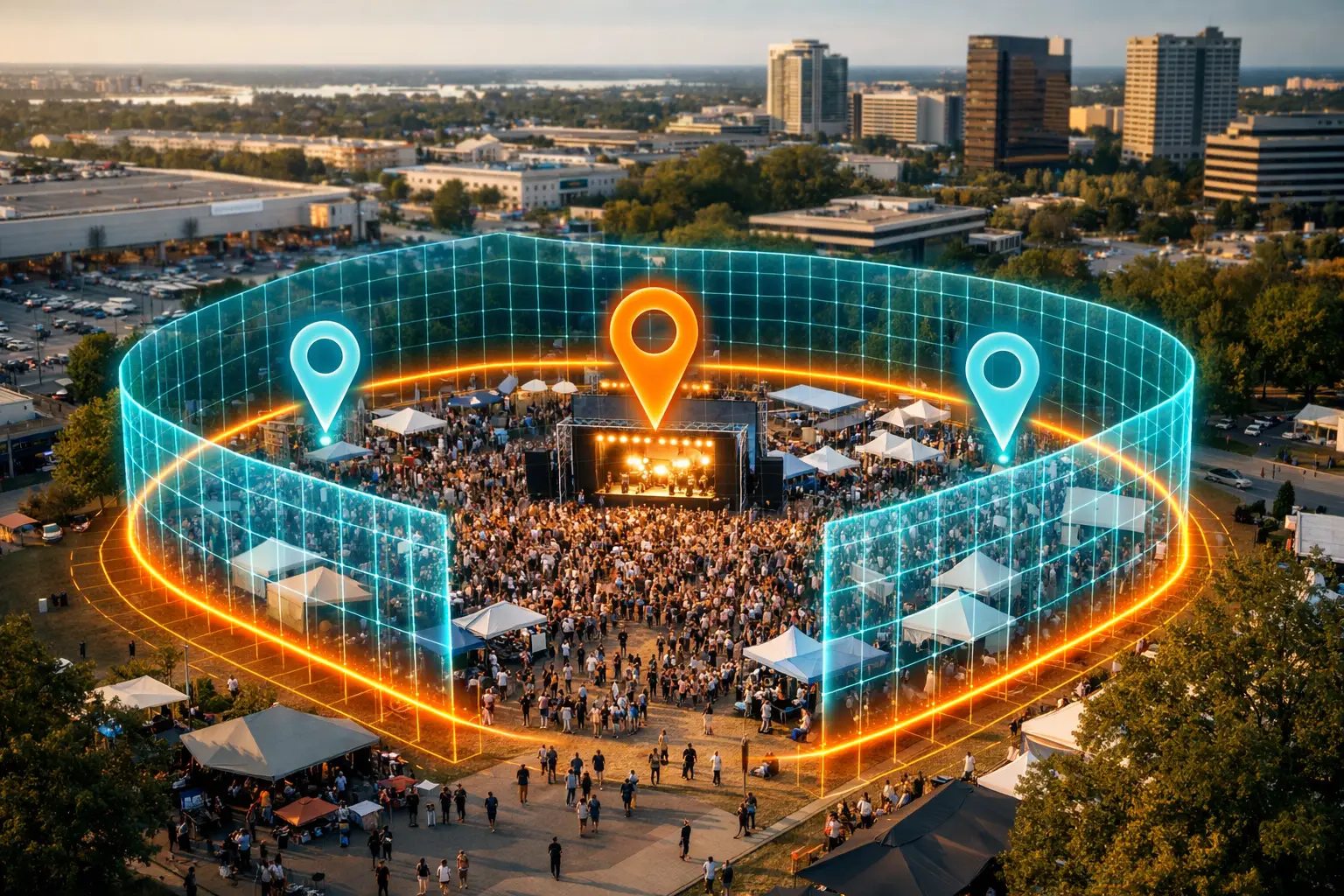
At its core, event geofencing means drawing a digital boundary around a real-world location, then using that location data to build an audience of devices seen within that area. Once that audience is created, ads can be delivered across devices like phones, tablets, desktops, and connected TVs.
That sounds simple, and it should be. But the details matter.
A good event campaign is not just about putting a fence around a convention center and calling it done. It is about choosing the right footprint, the right timeframe, the right message, and the right follow-up. A sloppy setup can pull in staff, vendors, nearby foot traffic, or people passing through. A smart setup focuses on the locations and behaviors that actually connect to your goal.
If you are sponsoring an industry conference, for example, you may want to target the expo hall, keynote space, and nearby hotels where attendees are staying. If you are trying to conquest traffic from a competitor at a trade show, you might geofence their booth footprint or a branded off-site event. If you are a local service business, you might target a large community festival and retarget attendees with a limited-time offer over the following two weeks.
Why event marketers use geofencing instead of broader ad targeting
Events create urgency, but they also create waste when your targeting is too loose. Social interest targeting and standard display audience segments can help, but they are still based on modeled behavior, content consumption, or profile assumptions. Geofencing adds a layer of real-world proof. Someone was physically present.
That does not mean geofencing is perfect or that it replaces every other tactic. It means it gives you a more grounded audience source when location matters.
For many advertisers, the biggest advantage is efficiency. You are not paying to reach a generic audience that might care. You are reaching people who attended the event, visited a competitor presence, or spent time in a relevant venue. That usually leads to stronger message relevance, better post-event recall, and cleaner reporting on what happened after the event.
There is also a timing advantage. Event campaigns often move fast, and traditional managed-service geofencing providers can slow everything down with high minimums, long setup cycles, and limited visibility once the campaign goes live. That model does not work well when you need to launch quickly, test creative, or adjust budgets in real time.
How to plan a geofence advertising campaign for events
The best event campaigns start with a clear outcome, not a map.
Before you draw a fence, decide what success looks like. Are you trying to generate leads after a trade show? Drive foot traffic to a nearby store during a festival? Promote a time-sensitive offer to concertgoers? Build awareness among attendees of a regional conference? Your answer affects everything from fence size to ad format to campaign duration.
Start with the event footprint
The event footprint should reflect how people actually move through the experience. A convention center alone may not be enough. Attendees may spend meaningful time in adjacent hotels, parking lots, shuttle pickup points, hospitality suites, or overflow venues. On the other hand, making the fence too broad can dilute the audience with unrelated visitors.
This is where precision matters. For a large outdoor event, you may need multiple zones rather than one oversized area. For a trade show, you may want separate targeting for the expo floor and nearby gathering spaces. For a stadium event, you might include entrances, premium seating areas, and surrounding entertainment districts depending on your objective.
Match the timing to the behavior
Event targeting is not only about where people go. It is also about when they were there.
A campaign targeting attendees during the event is useful if your goal is immediate action, like driving traffic to a nearby activation or restaurant. A campaign targeting devices seen during the event but activated afterward is usually better for lead generation, remarketing, and follow-up offers. In many cases, the strongest approach uses both: one message during the event and another after it ends.
A three-day conference and a one-night concert should not be treated the same way. The ideal lookback window, audience size, and creative cadence depend on attendance patterns and sales cycle length.
Build the message around context
This is where many campaigns fall flat. They target the right people and then show generic ads.
If someone attended a home improvement expo, your creative should reflect that context. If they visited a healthcare conference, the follow-up should match that professional interest. If they were at a local fair, a neighborhood offer may outperform a broad brand awareness message.
Specificity usually wins. Event-aware messaging feels more relevant because it is. Even small adjustments in headline, imagery, or offer can improve performance when the ad clearly connects back to the event experience.
Best uses of geofence advertising for events
Geofence advertising works especially well when the event audience has clear commercial value.
Trade shows are one of the strongest examples because attendees are often there for business reasons and are actively evaluating products or services. If you sell into that market, retargeting attendees after the event can keep your brand in front of them while they are still comparing options.
Consumer events can work just as well, but the offer needs to fit the moment. A local retailer, restaurant, clinic, gym, or home services company can target attendees at festivals, sports events, fairs, and concerts with location-specific offers that drive action after the crowd goes home.
It is also effective for competitor targeting. If a competing brand is exhibiting at an event or hosting an activation, geofencing that location can help you reach an audience that has already shown interest in the category. That does not guarantee conversion, of course. It simply gives you a smarter starting point than guessing who may be in-market.
What can go wrong with event geofencing
Geofencing is powerful, but it is not magic.
The first common mistake is targeting an event that is too small to generate a usable audience. If attendance is limited, or if dwell time is brief, your campaign may not collect enough devices to support meaningful delivery. In that case, the better move may be to widen the strategy to include surrounding relevant locations or use geofencing as one layer in a broader campaign.
The second mistake is poor fence design. Too tight, and you miss people. Too broad, and you pull in noise. This is especially risky in dense urban areas where venues sit next to offices, apartments, or unrelated businesses.
The third is weak follow-through. Too many advertisers spend heavily on event presence and then stop the conversation as soon as the event ends. Geofencing works best when it extends your event investment, not when it stands alone without a coordinated offer, landing page, or conversion path.
Reporting also deserves a realistic view. You can track impressions, clicks, conversions, and post-visit behavior, but performance depends on campaign setup, creative quality, audience size, and attribution approach. A clean dashboard helps, but it does not fix a weak strategy.
Choosing the right formats for event audiences
Display ads are often the starting point because they are fast to launch and useful for broad reach. Video can work well when you want a stronger brand impression or need to explain your offer in more detail. OTT and CTV can extend event retargeting into a bigger-screen environment, which is useful when your audience is valuable and your message benefits from more attention.
Digital audio can also make sense for certain local campaigns, especially when frequency and recall matter. The right mix depends on budget, audience size, and what you are asking people to do next.
The key is not choosing every format. It is choosing the formats that fit the sales cycle and attention level of the audience you captured.
A practical way to think about event geofencing
If your event strategy ends when the booth comes down or the gates close, you are leaving value on the table.
Geofence advertising gives you a way to keep marketing to people who raised their hand in the real world by showing up. That is useful whether you are trying to win business after a conference, drive local traffic after a festival, or reach people who engaged with a competitor at a live event. And because modern self-serve tools make campaign setup, changes, and reporting far easier than the old managed-service model, it is no longer something only big advertisers can test.
The smartest event marketers do not treat foot traffic as a temporary spike. They treat it as an audience worth building on while interest is still fresh.


