
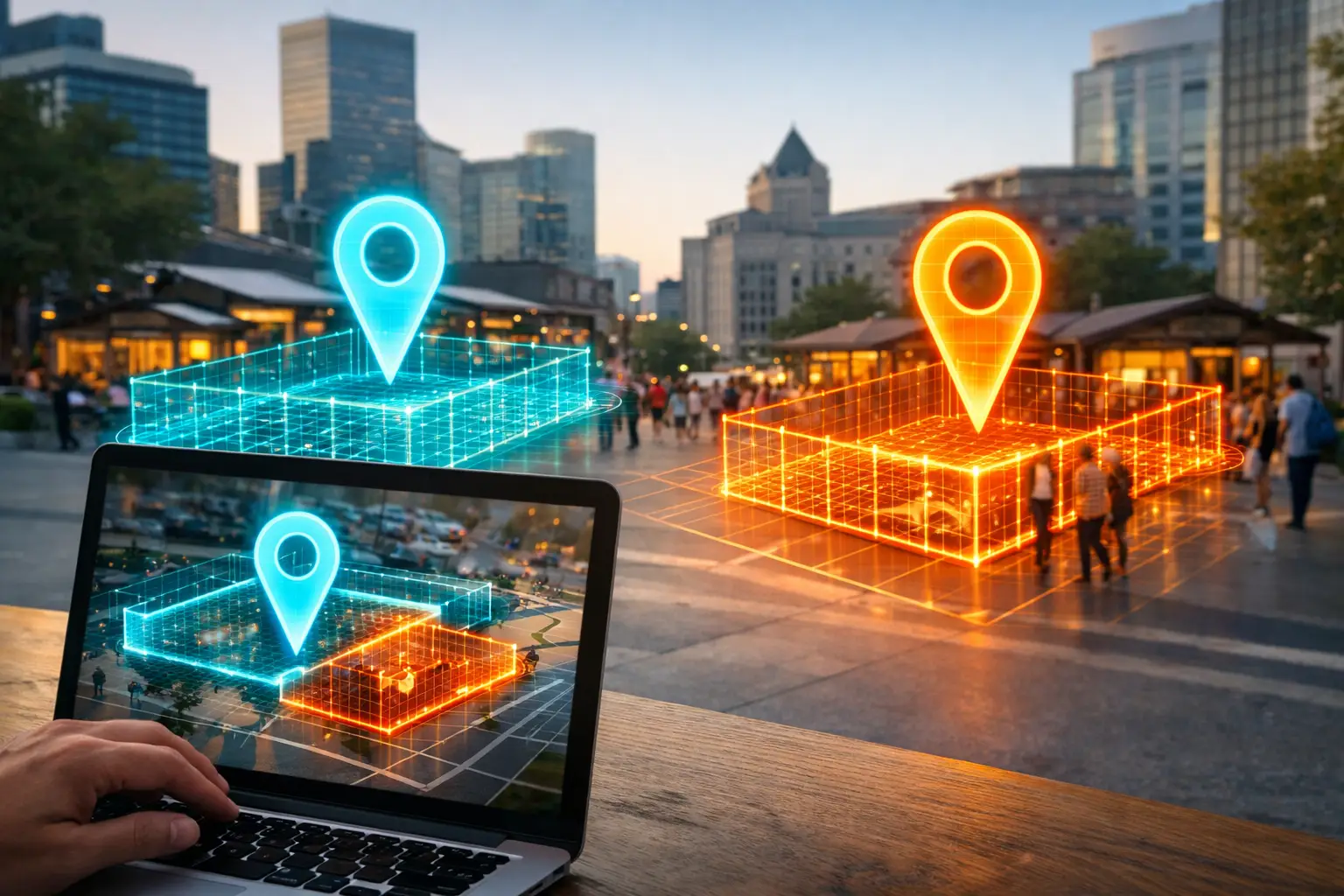

Sometimes local ad spend can actually be wasted on people who were never in-market to begin with. If you want a tighter approach, one of the smartest moves is to target visitors from competitor locations – people who have already shown real-world intent by walking into a competing business.
That idea is simple. The execution is where campaigns either work or burn budget. Competitor targeting can produce strong results, but only when the location strategy, audience window, creative, and measurement all line up. If you treat it like a blunt radius campaign, you will probably reach too many people with too little relevance. If you build it correctly, you can put your ads in front of a qualified audience with far less waste.
Why target visitors from competitor locations works
Most targeting options rely on assumptions or data that has a delay. Search behavior can sometimes be vague. Interest targeting can be broad. Demographics can tell you who someone might be, not what they actually did. Visiting a physical location is different. It is a real action.
When someone spends time at a competing store, office, dealership, gym, clinic, restaurant, or event, they are signaling intent in a way that matters. They may be actively shopping. They may be comparing options. They may already be a customer of the competitor. All three scenarios are valuable, depending on your offer.
This is why competitor location targeting can outperform broader local campaigns. You are not just chasing awareness. You are reaching people connected to a specific business category and often a specific buying moment.
Still, not every competitor visit means the same thing. A person stopping into a coffee shop last week is different from someone who visited an auto dealer twice in 10 days. Frequency, recency, sales timeline, and location quality matter. That is where precise geofencing can beat lazy geographic targeting.
What counts as a competitor location
A competitor location is not just the building with your rival’s sign on it. In practice, it can include a lot more. It might be a single storefront, a set of franchise locations, a showroom, a service center, a leasing office, a medical practice, a parking lot, or an event where the competitor is the main draw.
The key is specificity. If you geofence an entire shopping center because one competitor is inside it, your audience quality drops. You increase the likelihood of capturing people who visited the grocery store next door, not the business you care about. That is one of the biggest mistakes in hyper-location targeting.
Good competitor targeting starts with specific and accurate location mapping. The goal is to isolate the real point of visitation as closely as possible. Sometimes that is the building footprint. Sometimes it is a suite. Sometimes it is a defined event area. The more precise the zone, the better the audience quality.
How to target visitors from competitor locations without wasting budget
The first step is choosing the right competitors. That sounds obvious, but many advertisers overbuild this list. They add every nearby business in the category, assuming more locations mean more reach. Often, it just means weaker intent.
Start with the competitors most likely to overlap with your actual buyer. If you run a boutique fitness studio, the best audience may not come from every gym in town. It may come from two premium studios with similar pricing and similar members. If you sell HVAC services, targeting people who visited big-box home improvement stores may be less useful than targeting local service offices or home shows where active shoppers gather.
Additionally, creative matters just as much as the audience. If your ad says nothing more than We are nearby, do not expect much. The person already visited a competitor. You need to give them a reason to switch, compare, or take the next step. That could be price, convenience, speed, financing, availability, service quality, or a distinct offer.
The best competitor campaigns usually avoid naming the rival directly. Instead, they focus on the decision the customer is trying to make. Better value. Faster appointments. Easier scheduling. More flexible plans. Better service. The message should feel relevant to someone already in the market, not generic brand advertising.
All advertising, including geofencing, will have some level of “wasted” impressions and budget, and you don’t want to go so narrow that you miss opportunities. This is a practice of creating a balance have all of your ad dollars work for you as best they can.
Timing changes the outcome
There is a big difference between reaching someone while they are still evaluating options and reaching them after the decision is already made. That is why timing deserves more attention than it usually gets.
For some businesses, immediate follow-up works well. If someone visited a furniture showroom, reaching them later that day or within a few days may keep you in the consideration set. For others, you need a little distance. A gym promotion served right after someone signs up somewhere else may not land. A message a few weeks later might.
This is where campaign control matters. You want the ability to adjust flight dates, budgets, and audience windows without waiting on an agency ticket or managed-service bottleneck. Fast, logical changes are useful because competitor campaigns often reveal patterns only after they start. One location may outperform another. One audience window may pull stronger conversions. One message may clearly beat the rest.
The creative angle that usually works best
Competitor location targeting is not a license to be aggressive. It is a chance to be more relevant.
Ads tend to work better when they acknowledge buyer friction. Give people a reason to reconsider. Maybe your dealership offers a stronger warranty. Maybe your storage facility has better access and month-to-month flexibility. Maybe your apartment community offers more space for the same budget.
This is also a good use case for multiple formats. Display can build repeated visibility. Video can explain a clear differentiator. CTV can reinforce brand recall in the home. Audio can work when your offer is simple and time-sensitive. The best mix depends on budget and audience size, but the strategy should stay consistent across channels.
Measuring success beyond clicks
If you only judge competitor campaigns by click-through rate, you will miss the bigger picture. These campaigns often influence later action, especially for local services and high-consideration purchases.
A better approach is to track outcomes tied to business goals via physical conversation tracking. That could mean visits to your own location, lead submissions, quote requests, booked calls, or action in a conversion zone. Impression volume and engagement still matter, but they are not the finish line.
You should also compare competitor-targeted campaigns against broader local targeting. In many cases, the competitor audience will be smaller but more efficient. Lower waste often matters more than raw scale. A campaign that reaches fewer people but produces better leads is usually the better buy.
Where this strategy can go wrong
The biggest problem is poor location precision. If the fence is too loose, your audience gets over polluted. That means weaker performance and a misleading read on whether competitor targeting works at all.
The second issue is weak differentiation. If your ad does not answer why someone should care, the targeting alone will not save it. Being relevant is not enough. You still have to be compelling.
Third, some businesses expect instant conversion from every impression. That is not realistic. Competitor targeting improves audience quality, but it does not remove the need for repetition, testing, and a strong offer.
There is also a compliance and brand judgment factor. Certain industries need to be more careful about messaging and audience use. The tactic itself can be effective, but how you execute it should fit your market, your customer, and your standards.
When target visitors from competitor locations is the right move
This strategy makes the most sense when the customer has choices and location visits reflect serious intent. That includes retail, fitness, automotive, real estate, home services, senior living, higher education, restaurants, and franchise businesses. It is especially useful when your sales pitch is clear and your local market is competitive.
It is less useful when your category has very low local competition, weak foot traffic signals, or a buying journey that rarely involves physical visits. In those cases, other targeting methods may deserve more of the budget.
The upside is that competitor targeting no longer has to be complicated to run. Platforms built for self-serve geofencing make it much easier to map precise locations, launch campaigns quickly, and monitor results without high minimums or opaque reporting. That matters for agencies, local businesses, and multi-location brands that want more control and less friction.
If you are going to spend money trying to win business from nearby competitors, do not settle for broad guesses. Start with real visitation, keep the location targeting tight, and give people a reason to choose you instead.


