
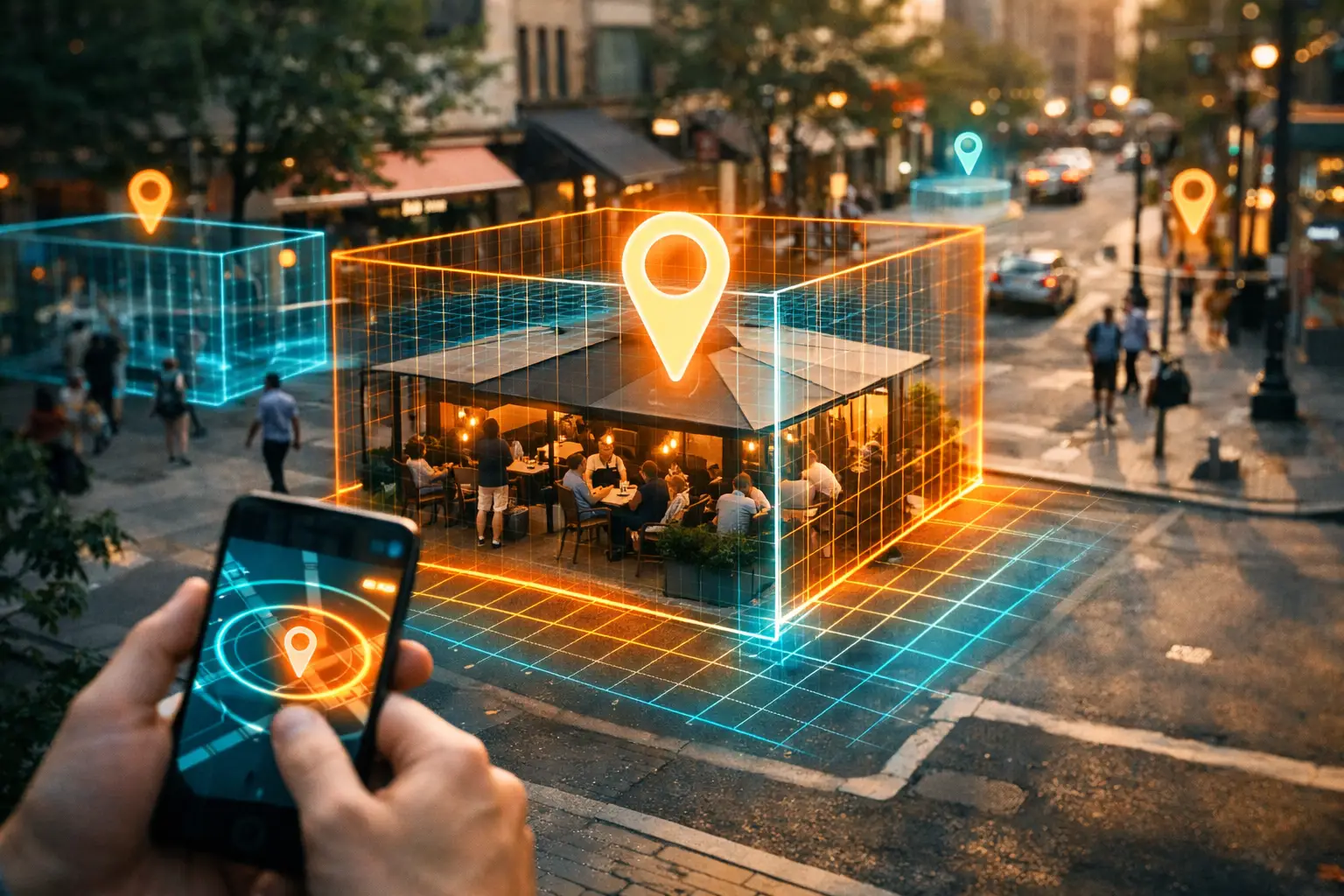

Most local ad waste starts with a map that is too big or targeting that’s too broad. If you are trying to reach people near a specific store, event, apartment complex, or competitor, broad radius targeting is usually where performance falls apart. This guide to hyperlocal ad targeting is about getting much more precise so your budget follows real-world behavior instead of vague geography.
Hyperlocal targeting is not just “local advertising, but smaller.” It works best when you define exact places that matter to your business and target the people who have actually been there. That could mean a retail storefront, a trade show, a student housing complex, or a competitor across town. The point is simple: fewer wasted impressions, stronger relevance, and better odds that your ads reach people with real intent.
What hyperlocal ad targeting actually means
Hyperlocal ad targeting focuses on tightly defined physical locations rather than broad geographic areas like ZIP codes, cities, or wide radiuses. In practice, that means drawing specific geofences around meaningful places and building audiences from visits to those locations.
That distinction matters. A one-mile radius around a business can include homes, roads, unrelated stores, and plenty of people with no reason to care about your offer. A tightly drawn geofence around the actual place where intent happens gives you a cleaner audience. If your goal is to reach shoppers who visited a competing store, people who attended a concert, or residents of a certain neighborhood, precision matters more than reach.
This is also where many advertisers get frustrated with traditional providers. They want exact location targeting, but end up pushed into broad areas, high minimums, or managed-service setups that slow everything down. A better approach is direct control over the locations, audience logic, budget, and reporting.
Why a guide to hyperlocal ad targeting matters now
The value of hyperlocal targeting is not novelty. It is efficiency. Local campaigns often underperform because the audience definition is weak from the start. Marketers think they have a creative problem or a budget problem when the real issue is that they are paying to reach too many irrelevant people.
Hyperlocal campaigns can help solve that, but only if they are built with the right objective. If you want foot traffic, lead generation, event follow-up, or competitor conquesting, each goal changes how you choose locations and measure results. There is no one-size-fits-all setup.
A restaurant opening a new location may want to target nearby apartment buildings, office complexes, and competitor dining spots. A home services brand may care more about homeowners in specific neighborhoods and recent visitors to big-box home improvement stores. An agency running event marketing may need to build an audience from conference attendees, then continue serving ads on mobile, desktop, tablet, and TV after the event ends. Same tactic, different execution.
Start with the location, not the ad
The smartest hyperlocal campaigns begin with a location strategy. Before you write ad copy or set a budget, decide which real-world places signal buying intent.
The best locations usually fall into a few categories. Your own locations are useful for retention, upsells, and brand reinforcement. Competitor locations are useful when you want to win market share. Event venues are strong for post-event follow-up. Neighborhoods, buildings, and complexes are effective when the audience shares a clear profile tied to where they live or work. Service areas can also work, but they should still be broken down into meaningful zones instead of treated like one giant territory.
This is where precision beats convenience. If you target an entire shopping center when only one tenant matters, you dilute the audience. If you target a whole stadium district instead of the venue itself, you pick up noise. Good hyperlocal targeting is careful by design.
How to build a hyperlocal campaign that performs
Define one clear objective
Pick the job the campaign needs to do. Brand awareness, leads, store visits, event retargeting, and conquesting all require different choices. If you try to do all of them at once, the campaign gets muddy fast.
For example, a conquesting campaign might focus on people who visited a competitor in the last 30 days and serve them a direct offer. An awareness campaign for a new location may target nearby high-value buildings and neighborhoods with a broader message. A post-event campaign might use video or display to stay in front of attendees after they leave.
Choose locations with intent, not just proximity
Not every nearby place matters. Focus on locations that reveal something useful about the person who visited.
A gym can target nearby nutrition stores, wellness centers, or competing fitness locations. A senior living community may target local events for older adults or neighborhoods with the right demographic fit. A law firm may target courthouses, business districts, or competitor offices depending on the practice area.
The question is always the same: does a visit to this place make someone more likely to care about my offer?
Keep geofences tight
This is where many campaigns go wrong. Bigger fences do not automatically mean better results. They often just add waste.
Draw geofences around the actual building, venue, or property whenever possible. If the business is inside a multi-tenant center, isolate the relevant footprint instead of blanketing the entire area. If you are targeting an event, make sure the fence reflects where attendees truly are, not where random passersby happen to drive through.
There are trade-offs here. If the fence is too tight, you may limit audience size. If it is too loose, you lower audience quality. The right balance depends on traffic volume, campaign duration, and your goal.
Match the ad format to the moment
Display ads are flexible and cost-effective for many local campaigns. Video pre-roll can work well when you need stronger storytelling. OTT and CTV are useful when you want local reach on larger screens, especially for awareness and follow-up. Digital audio can be a smart fit for frequency and local recall.
The right choice depends on budget and buying stage. If you need immediate action, display with a strong offer may outperform a more expensive format. If you are nurturing a high-value local audience over time, using multiple formats can make sense.
Build a realistic measurement plan
Hyperlocal campaigns should be measurable, but not every success metric looks the same. Some advertisers care most about clicks and leads. Others care about store visits, conversion-zone activity, or post-event engagement.
What matters is tying the metric to the objective you set at the start. If the goal is awareness among a precise audience, judging the campaign only by click-through rate can be misleading. If the goal is lead generation, impressions alone will not tell you much.
Common mistakes that waste budget
The biggest mistake is confusing local reach with location precision. A broad radius may look easier, but easy is not the same as effective.
Another common issue is targeting locations without a clear audience hypothesis. Just because a place is nearby does not mean it is useful. You need a reason that location should correlate with interest or intent.
Creative mismatch is another problem. If you target competitor visitors, your message should acknowledge a reason to switch. If you target event attendees, the ad should reflect event context. Generic creative weakens a strong audience.
Finally, many advertisers give up too early or optimize too late. Hyperlocal campaigns need enough time to build data, but they also need active management. Watch which locations drive engagement, which creatives hold attention, and whether your audience windows are too short or too long.
When hyperlocal ad targeting works best
Hyperlocal targeting tends to perform especially well when buying intent is tied to physical movement. Retail, restaurants, real estate, automotive, education, events, home services, and franchise marketing all fit naturally.
It is also strong for businesses that need more control than traditional geofencing vendors usually offer. If you are tired of slow launch timelines, hidden friction, or paying for broad targeting dressed up as precision, a self-serve approach can be a major advantage. That is one reason platforms like Qujam resonate with advertisers who want exact geofences, fast setup, and real visibility into campaign performance without enterprise baggage.
Still, hyperlocal targeting is not magic. If the offer is weak, the landing page is poor, or the sales process is slow, location precision alone will not fix the funnel. It improves audience quality. You still have to close the loop.
A better way to think about local media
The real shift is this: stop buying local media as if geography alone creates relevance. People do not become good prospects just because they are somewhere nearby. They become better prospects when their location tells you something meaningful about what they need, where they shop, what they attended, or who they are considering.
That is what makes hyperlocal ad targeting worth the effort. It gives local advertisers a way to act on real-world intent instead of hoping broad targeting eventually finds the right person. If you start with the right places and stay disciplined about precision, your campaign has a much better chance of feeling timely, useful, and hard to ignore.


