
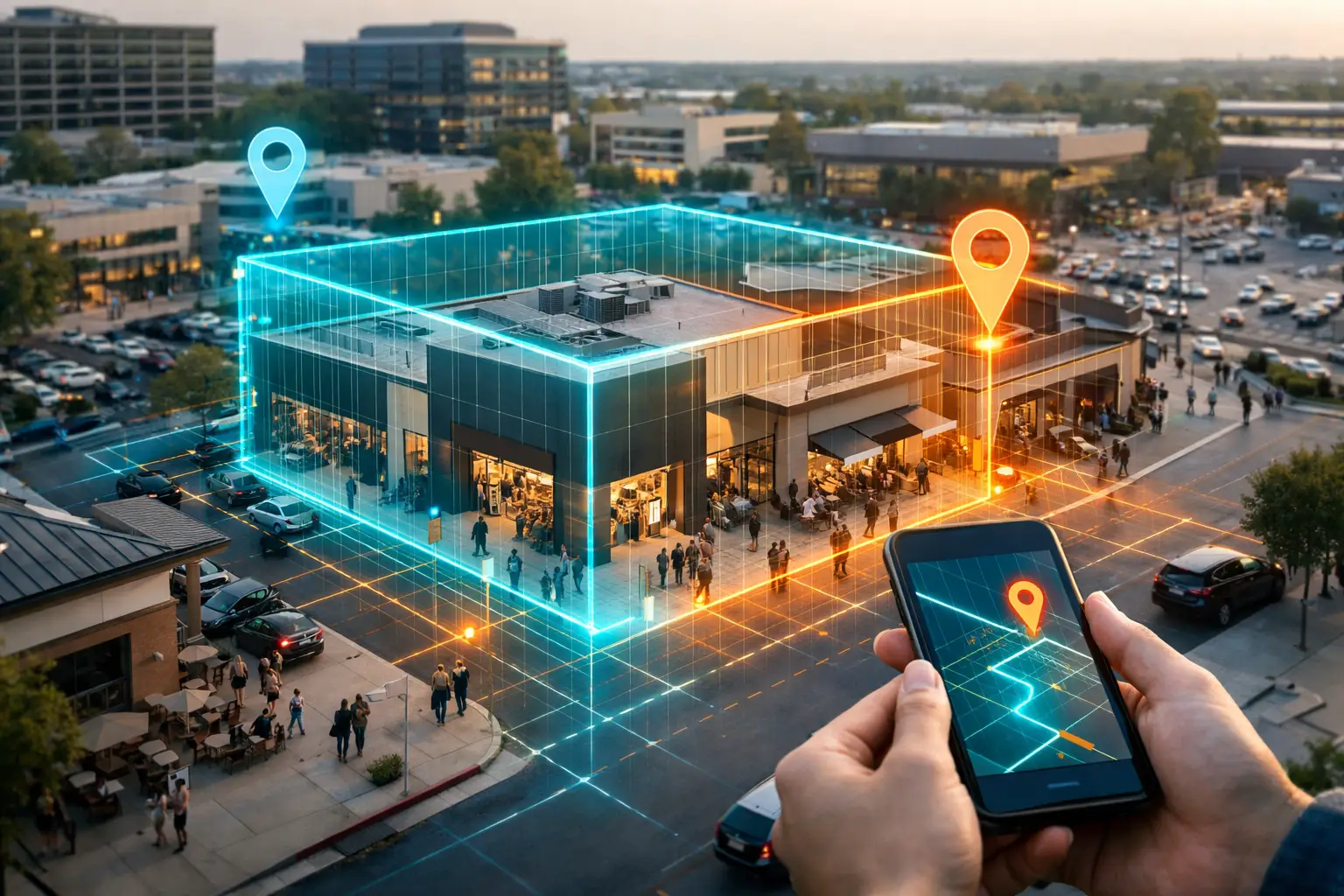

A geofencing campaign can look great on paper and still leave one big question unanswered: did those ads actually move people to take action? That is where geofencing conversion tracking matters. If you are targeting people based on where they have been, you also need a clear way to measure whether that targeting led to store visits, leads, or other real business outcomes.
Too many advertisers settle for surface-level metrics like impressions and click-through rate. Those numbers have a place, but they do not tell the full story for location-based advertising. When you are paying for precision, you should be able to see whether that precision is producing results.
Do you need a conversion zone to run geofence advertising?
The short answer is no. Physical conversion tracking is extremely valuable and recommended for advertisers with physical locations, but not all advertisers have such locations. That doesn’t mean geofencing isn’t a good tactic for non-location based brands…it just means they aren’t able to leverage conversion zone tracking.
What geofencing conversion tracking actually measures
Geofencing conversion tracking connects ad exposure to a defined action. That action might be a physical visit to a business location, a visit to a dealership lot, a walk-in after attending an event, or another measurable step that happens after someone sees or clicks an ad.
In practical terms, advertisers set up a campaign to reach users who enter or have entered a target area. Then they define a conversion zone, which is the place or places that count as a successful outcome. If a user who was served the ad later enters that conversion zone, the platform can attribute that visit as a conversion, based on the available device and attribution data.
This is what makes geofencing different from standard digital display reporting. You are not just measuring online engagement. You are measuring whether ad delivery helped drive movement in the real world.
Why it matters more than clicks for local campaigns
For local businesses, agencies, and multi-location brands, clicks can be misleading. A person may see your ad, decide to visit later, and never click at all. That does not mean the campaign failed. It means the customer journey happened offline.
Geofencing conversion tracking closes that gap. It gives advertisers a way to evaluate performance based on actions that matter to the business, not just digital interactions that are easy to count. If your goal is foot traffic, appointment volume, showroom visits, or event turnout, tracking conversions by location is often more useful than tracking clicks alone.
It also helps cut through waste. If one audience segment is generating store visits and another is only generating impressions, you can adjust budget based on what is producing results. That is where smart local media buying starts to get sharper.
How geofencing conversion tracking works
The basic setup is straightforward, even if the underlying technology is more complex.
First, you define the audience geofence. That could be competitor locations, a trade show, neighborhoods, service areas, or your own stores. The campaign then serves ads to devices associated with people in those locations, depending on the campaign structure.
Next, you define the conversion zone. This is the place that represents success. For a restaurant, it may be the restaurant itself. For an auto dealer, it may be the dealership lot. For a healthcare provider, it may be a clinic location. For a franchise group, it may be multiple storefronts.
After the campaign runs, the platform looks for qualified visits to those conversion zones from users who were exposed to the campaign. Reporting then shows how many conversions occurred, along with the broader campaign metrics that help you judge efficiency.
That is the simple version. The more important point is this: good tracking depends on good setup. If your geofences are sloppy or your conversion zones are too broad, your reporting will be less useful.
What counts as a conversion depends on your business
This is where advertisers get tripped up. A conversion is not universal. It depends on your business model, sales cycle, and campaign objective.
A coffee shop may care about same-week foot traffic. A law firm may care more about website form fills after location-based retargeting. A home services brand may want to target homeowners in a defined service area, then track lead actions rather than walk-ins. An event marketer may want to capture attendees and measure later visits to a retail location.
The point is not to force every campaign into the same reporting model. The point is to define success before launch. If you skip that step, you end up chasing numbers that look impressive but do not help you make decisions.
Common mistakes that weaken geofencing conversion tracking
The biggest mistake is building the campaign before defining the conversion. That is backwards. You need to know what outcome matters first, then build the audience, creative, and reporting around it.
Another common issue is using poorly drawn geofences. If you target an area that includes unrelated businesses, roads, or shared parking lots, you may capture the wrong audience. The same problem applies to conversion zones. If the conversion area is too large, you risk overcounting visits that were not truly tied to your business.
Timing also matters. Some businesses expect immediate results from campaigns with longer consideration windows. A furniture store, med spa, or B2B service may not see conversions at the same pace as a quick-service restaurant. If you judge the campaign too early, you may cut off something that was working.
And then there is the reporting trap: looking at one metric in isolation. A high conversion count sounds great, but you still need context. How much did those conversions cost? Which locations performed best? Which audiences drove the strongest return? Good reporting should help you optimize, not just admire a dashboard.
How to use geofencing conversion tracking to improve campaigns
Once tracking is in place, the next step is optimization. This is where a lot of providers fall short. They let you run a campaign, then bury the data or make it hard to act on. That is a problem if you want control over performance.
Start by comparing audience sources. Did competitor targeting outperform event targeting? Did one neighborhood convert better than another? Did your own-site retargeting audience drive more visits than cold prospecting? These comparisons help you move budget toward what is actually generating outcomes.
Then review creative performance. In many local campaigns, the offer matters more than the artwork. A direct message like limited-time pricing, free consultation, or visit us this weekend may outperform a general brand message. If one version drives more conversions, keep refining in that direction.
You should also compare device and inventory types when relevant. Display, OTT, CTV, video pre-roll, and digital audio can all play different roles in the path to conversion. Some channels are stronger for awareness, while others may support more immediate action. It depends on the audience and the buying context.
Finally, look at location-level performance. For businesses with multiple sites, geofencing conversion tracking can reveal differences between stores that would otherwise be hidden. One location may need a different offer, tighter targeting, or a larger budget because demand is stronger nearby.
Geofencing conversion tracking is powerful, but not magic
There is a reason serious advertisers care about this data. It helps connect media spend to business outcomes in a way that standard digital reporting often cannot. But it still needs to be interpreted correctly.
Attribution is never perfect. Shared devices, privacy limitations, foot traffic patterns, and campaign timing can all affect results. That does not make the data useless. It means you should use it as a decision-making tool, not as a fantasy of total certainty.
The strongest advertisers treat conversion tracking as one part of a bigger performance picture. They pair it with lead volume, sales trends, seasonality, creative testing, and market context. That is how you avoid overreacting to one report and start making better budget decisions over time.
What advertisers should expect from a platform
If you are running geofencing campaigns, you should not have to guess whether they worked. You should expect clear setup options, reliable conversion zone configuration, live reporting, and the ability to make changes without waiting on a managed-service middleman.
That is especially important for small and midsize businesses, agencies, and franchise marketers who do not have time for bloated ad tech workflows. You need a platform that makes geofencing conversion tracking usable, not one that hides basic performance data behind delays, minimum spends, or vague reporting.
A good platform should help you launch quickly, define meaningful conversion goals, and see what is happening while the campaign is still live enough to improve it. That is one reason self-serve tools are gaining ground. Advertisers want more control and fewer excuses.
Qujam is built around that reality. If you want to target real-world audiences and measure whether those campaigns are driving real-world results, the reporting has to be practical, visible, and easy to act on.
The best part of geofencing conversion tracking is not the metric itself. It is what happens when you stop guessing, start measuring the right outcome, and make your next campaign smarter than the last one.


