
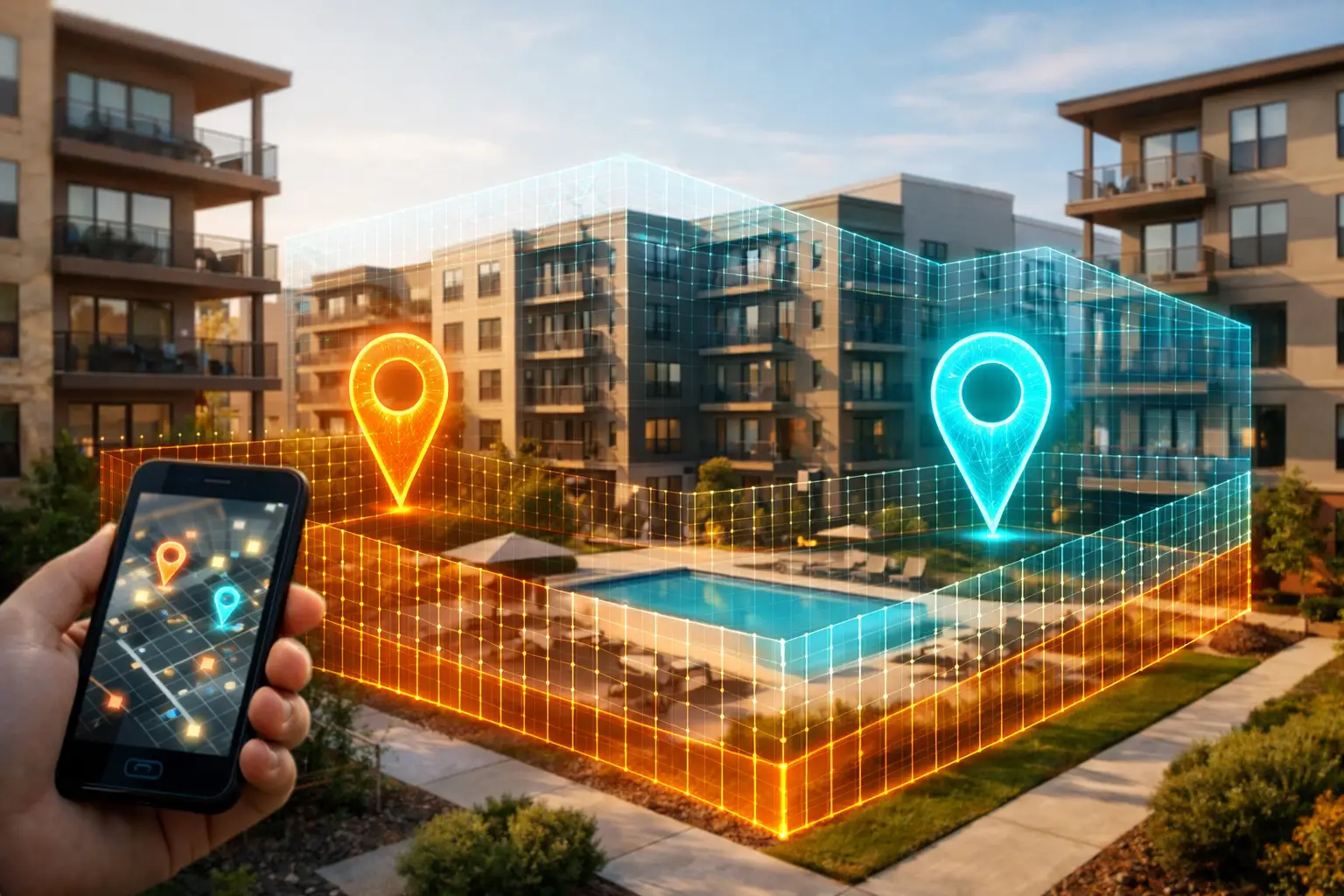

A single apartment complex can hold hundreds of potential customers, but a sloppy radius around it can also capture a grocery store, a school, nearby homes, and everyone passing through. That is the difference between simply buying local impressions and learning how to geofence apartment complexes effectively. The goal is not to target a pin on a map. It is to reach relevant people who physically visited the property while cutting impressions that have nothing to do with your offer.
For home services, fitness studios, restaurants, retail stores, insurance agencies, moving companies, and local brands, apartment-complex geofencing can be a practical way to build awareness and generate demand close to where people live. The results depend on the map, the audience rules, the message, and what happens after a person sees your ad.
Start With a Business Case, Not a Map
Before drawing a boundary, decide why a specific complex matters to your business. A pest control company may want to reach residents in older multifamily properties. A nearby restaurant may promote delivery or a weeknight special. A moving company may focus on buildings with frequent turnover. An internet provider may want to build awareness in communities where it is available.
That purpose determines the properties you select and the campaign you run. High-end luxury buildings, student housing, senior communities, and workforce housing are all apartment complexes, but they do not represent the same audience or buying behavior. Treating every property as interchangeable is an easy way to waste budget.
Build a short target list based on real business signals: serviceability, customer value, proximity, property type, competitor presence, and local demand. If you operate across several markets, organize complexes into separate groups by city, neighborhood, or campaign objective. That makes it easier to compare performance instead of mixing every location into one unclear report.
How to Geofence Apartment Complexes With Precision
Apartment-complex geofencing works best when the boundary follows the property itself. A proper geofence is a custom shape around the buildings, parking areas, leasing office, shared amenities, and other areas that reasonably belong to the complex. It is not a broad circle dropped over the middle of the property.
Start by reviewing the property on a detailed map or satellite view. Identify the actual parcel layout, entrances, building footprints, parking lots, clubhouse, and mail area. Then draw a polygon that includes the places residents and visitors are likely to be while excluding nearby businesses, roads, and unrelated residential areas whenever possible.
Precision matters most in dense areas. A complex next to a shopping center or busy intersection can produce plenty of location signals, but many may belong to nonresidents. In a suburban setting with more space between properties, a larger boundary may be acceptable. The right shape depends on the physical layout, not a one-size-fits-all radius.
Avoid trying to make the fence overly tight, too. Excluding all parking, walkways, and community spaces can reduce useful audience volume. The practical standard is simple: include the relevant property experience, remove obvious spillover, and inspect the fence before the campaign launches.
Build an Offer That Makes Sense
A geofence does not create demand by itself. Your ads need to answer a simple question: why should someone who lives here care?
The strongest apartment-complex campaigns usually connect the offer to convenience, proximity, or a resident-specific reason to act. A local gym might offer a nearby trial. A dog groomer could promote pickup availability in a particular neighborhood. A home cleaning company could use a first-visit incentive. A restaurant may feature delivery, online ordering, or a community-specific deal.
Keep the creative clear enough to understand in seconds. Use a recognizable brand, one primary benefit, a direct call to action, and a landing page that matches the promise. If the ad says “$50 off your first clean,” the landing page should repeat that offer immediately instead of forcing visitors to hunt for it.
Localized creative can help, but do not make it feel invasive. Saying “Serving residents near Downtown Austin” is usually more comfortable than naming a specific building in every ad. The point is relevance, not making people wonder how closely they are being watched.
Use the Right Mix of Ad Formats
Display ads are useful for broad awareness and repeated visibility. Video can communicate a service, transformation, or local offer quickly. Connected TV can extend reach to household screens, while digital audio can support frequency during commutes, workouts, or daily routines.
The best format depends on the buying cycle. For an urgent service like water damage restoration, display and video with a direct response message may be the priority. For a local retail brand trying to become familiar in a new neighborhood, a mix of display, video, and CTV may make more sense.
Budget is a real trade-off. Spreading a modest budget across every format can leave each channel underpowered. Start with one or two formats that match the goal, then expand when you have enough delivery and conversion data to make a decision.
Set Frequency, Timing, and Exclusions Deliberately
Frequency controls how often a person can see your ads. Too little exposure and the campaign is forgettable. Too much and you burn through budget or create annoyance. There is no universal number because the right frequency depends on your offer, market, creative, and campaign length. Qujam’s goals help adjust to the ideal frequency you want along with system optimization efforts.
For a local awareness campaign, steady exposure over several weeks often works better than spending the full budget in a few days. For a short promotion, event, or seasonal offer, a tighter delivery window can be appropriate. Refresh creative when a campaign runs for longer periods so the audience does not see the same message repeatedly.
If you are targeting competitor-adjacent apartment communities, make sure the property boundary does not unintentionally include the competitor storefront unless that is part of the strategy.
Measure More Than Impressions
Impressions tell you that ads were delivered. They do not tell you whether the campaign helped the business. Set up meaningful conversion zones or actions before launch, such as visits to your store, form submissions, phone calls, quote requests, online orders, or appointment bookings.
Then compare performance by property group, creative, format, and timeframe. If one cluster of complexes produces strong site engagement but few leads, the offer or landing page may need work. If another produces store visits at an efficient cost, consider adding similar communities nearby.
Be realistic about attribution. A customer may see an ad, search your business later, ask a friend for a recommendation, and convert days afterward. Location-based reporting is valuable, but it should be considered alongside your CRM, call tracking, web analytics, and sales data. The objective is a clearer view of performance, not a claim that every sale came from one impression.
Keep Privacy and Compliance in View
Location-based advertising should be handled responsibly. Campaigns should use privacy-conscious, consent-based location data and avoid sensitive-location targeting or messaging that suggests knowledge of an individual’s personal activity. Apartment communities are residential locations, so respectful language matters.
Focus your campaign on aggregated audiences and relevant offers, not personal assumptions. Do not imply that you know someone lives in a particular unit, has a certain income, or needs a sensitive product or service. This approach protects your brand as much as it supports compliance.
A self-serve platform such as Qujam can make the operational side easier: draw exact property boundaries, manage campaigns directly, monitor delivery, and adjust based on live reporting without waiting on a managed-service team. But the technology only works as well as the strategy behind it.
The next time a local market looks too broad, do not default to a ZIP code or oversized radius. Choose the communities that fit your customer, draw boundaries that reflect the real property, and give those residents a useful reason to pay attention. That is where apartment-complex geofencing starts earning its budget.


