
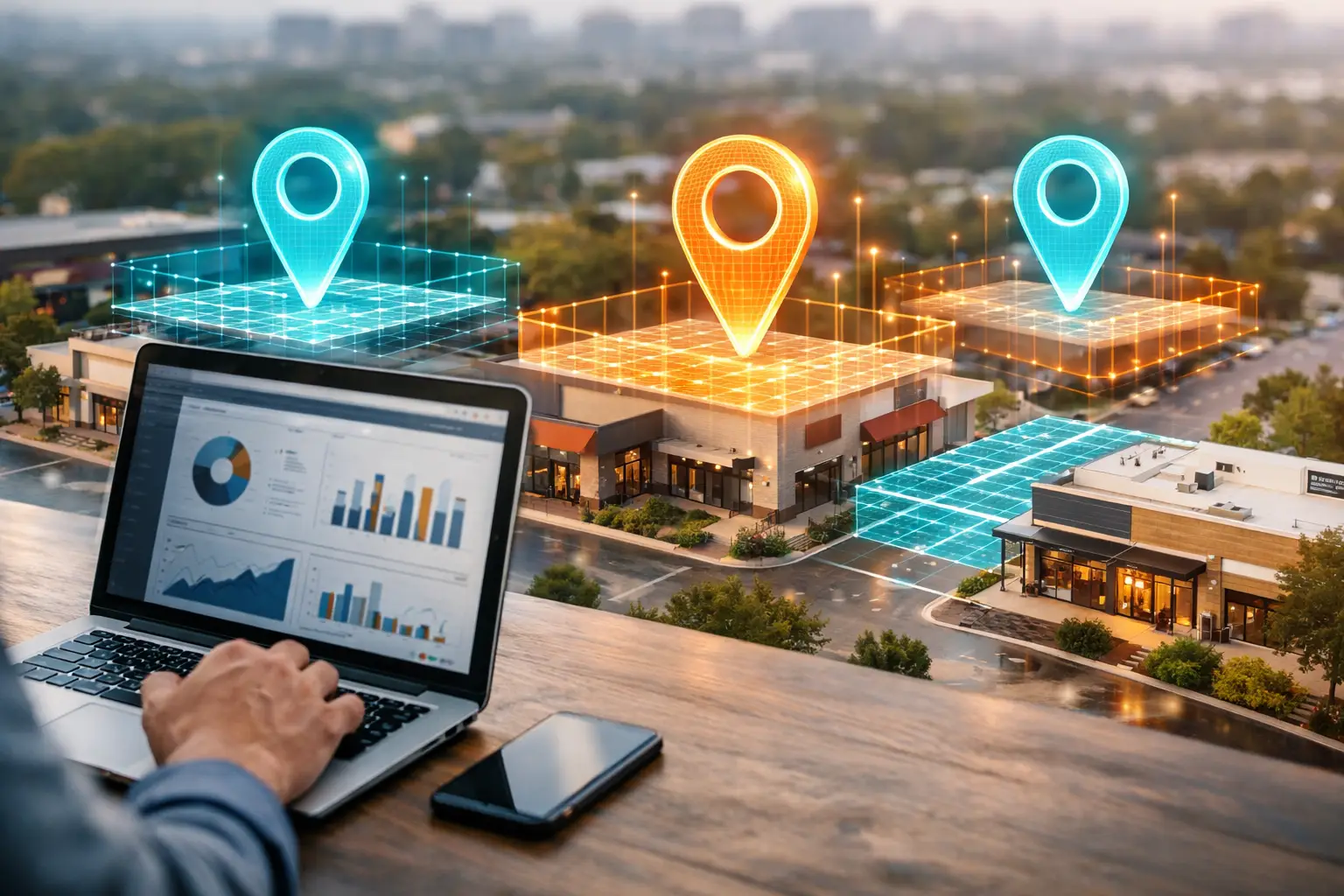

A regional manager notices the same problem in every market review: one store is overperforming, three are flat, and the ad strategy treats all four like they live on the same block. That is usually where a multi location advertising platform starts to make sense. When every location has different competitors, customer behavior, trade areas, and sales goals, broad campaigns stop being efficient.
For multi-location brands, the real challenge is not just getting ads live. It is running local campaigns at scale without losing control, overspending on the wrong audiences, or waiting on a managed-service vendor every time something needs to change. The right platform solves that by giving marketers one place to launch, adjust, and measure campaigns for each location while still keeping the brand organized.
What a multi location advertising platform actually does
At a basic level, a multi location advertising platform helps businesses manage advertising across multiple storefronts, territories, franchises, or service areas from one system. But that definition is too soft to be useful. What matters is how it handles local variation.
A good platform lets you keep central control over budget, creative standards, and reporting, while still tailoring campaigns to individual markets. That means Store A can target customers who visited a nearby competitor, Store B can promote a location-specific offer, and Store C can focus on a service radius instead of foot traffic. All of that can happen without building every campaign from scratch in separate tools.
This is especially important in location-based advertising. If you are trying to reach people near a dealership, around a medical office, inside a service area, or after they attended an event, the campaign setup needs to reflect real geography. ZIP-code targeting alone will not cut it. A platform built for this kind of work should support geofencing, audience building based on real-world visits, and cross-device delivery so the targeting does not stop at a mobile impression.
Why general ad platforms fall short for local scale
Most ad platforms can technically run campaigns for more than one location. That does not mean they are designed for multi-location marketing.
The gap usually shows up in operations. Teams end up duplicating campaigns manually, stitching together reports, and making broad audience assumptions because true local targeting is hard to manage. One franchise group may want location-level visibility, while corporate wants roll-up reporting. An agency may need to launch campaigns for 20 clients with separate budgets and geographies. A service business may not even have storefronts, but still needs to advertise by territory. General platforms tend to make those use cases harder than they should be.
There is also the issue of waste. If a campaign targets too broadly, impressions go to people who are outside the trade area, nowhere near a competitor, or unlikely to convert for that specific location. When that happens across dozens of markets, waste adds up fast.
A more focused platform gives you tighter geographic control and clearer reporting. That matters because local advertising is rarely a one-size-fits-all decision. The market around each location has its own conditions, and the platform should help you react to them instead of flattening them.
The features that matter most
Not every feature list deserves attention. For multi-location advertisers, a few capabilities do most of the heavy lifting.
Location-based audience targeting is first. You should be able to target people based on where they have actually been, whether that is your own store, a competitor location, a nearby event, a neighborhood, or a defined service zone. This is where geofencing becomes more than a buzzword. It lets you reach audiences with much more precision than broad demographic targeting alone.
Cross-device delivery matters just as much. If someone visited a target location on their phone, your ads should not be limited to that device. The ability to continue messaging across smartphones, tablets, desktops, and connected TVs gives local campaigns more reach and more frequency without guessing who the audience is.
Self-serve campaign control is another major factor. Many businesses do not want to wait on back-and-forth emails just to launch a campaign, change a budget, or update creative. A strong platform puts those controls directly in the advertiser’s hands. That does not mean everyone wants zero support. It means support should be available without being mandatory.
Reporting is where weak providers get exposed. If the dashboard only shows top-line impressions and clicks, it will not help much when you are trying to evaluate performance across multiple locations. You need visibility into delivery, engagement, conversions, and location-level outcomes so you can shift budget based on what is actually working.
How to use a multi location advertising platform well
The biggest mistake multi-location marketers make is centralizing everything except strategy. They keep one budget, one message, and one audience definition, then wonder why results vary so much by market.
A better approach starts with segmentation. Group locations by meaningful differences, not just region. One cluster may compete heavily with nearby rivals. Another may need awareness because foot traffic is low. Another may need to push a seasonal promotion. When you segment locations this way, the platform becomes a tool for precision instead of just a campaign warehouse.
Creative should follow the same logic. Brand consistency matters, but local relevance matters too. A campaign can use approved brand assets while still calling out the right city, offer, service, or urgency for each location. Generic creative is easier to scale, but often weaker in performance.
Budgeting should also reflect local conditions. A flagship location in a dense market may justify more aggressive spend than a rural location with less competition. This is where live reporting becomes useful. If one location is generating stronger conversion activity, you can reallocate without waiting for a monthly wrap-up.
For advertisers new to geofencing, start simple. Pick a few priority locations, define a clear audience, and run a campaign with one business goal. It could be competitor conquesting, event attendee retargeting, or awareness around a new store opening. Once the setup and reporting make sense, scaling to more locations becomes much easier.
Who benefits most from this kind of platform
Franchise organizations are an obvious fit because they constantly balance corporate oversight with local execution. They need standards, but they also need flexibility. A multi location advertising platform helps them do both.
Agencies benefit for a different reason. Managing several local clients across multiple markets gets messy fast when every campaign requires custom coordination. A centralized system with location-level controls saves time and makes it easier to show results clearly.
Service-area businesses also get real value here, even without storefronts. HVAC companies, home services providers, legal firms, and healthcare groups often serve specific territories rather than one address. If the platform can target neighborhoods, zones, and competitor locations, it becomes a practical lead-generation tool rather than just a brand-awareness channel.
Retail, restaurants, automotive groups, and event marketers also tend to see strong use cases because location is already central to how customers choose where to go.
What to watch out for before you choose one
Not every platform that claims to support multiple locations is built for operational simplicity. Some still rely heavily on managed service, which means you are paying for delays as much as expertise. Others have high minimums that make local testing harder than it should be.
You should also be cautious about vague reporting and inflated promises. If a platform cannot clearly show where ads ran, how audiences were built, and what happened after delivery, then decision-making gets cloudy fast. Precision targeting is only useful if measurement is credible.
Ease of use matters more than many teams expect. A platform can have advanced targeting and still be a pain to operate. If campaign setup is clunky or account access is restrictive, the tool becomes another bottleneck. That is one reason many advertisers move toward self-serve options. They want speed, visibility, and fewer layers between idea and execution.
For businesses that need geofenced targeting without the usual friction, Qujam fits this shift well because it gives advertisers direct control, fast setup, and reporting that is built for action, not excuses.
The real value is better local decisions
The best reason to use a multi location advertising platform is not convenience, even though convenience helps. It is the ability to make smarter local decisions with less waste.
When you can target by real-world behavior, adjust campaigns market by market, and see performance clearly, advertising stops being a blunt instrument. You do not have to guess which location needs more support or whether broad targeting is doing the job. You can act on what the market is telling you.
That is what multi-location advertising should look like now: less waiting, less waste, and more control where it actually counts. If your current setup treats every location the same, that is probably the first thing worth changing.


