
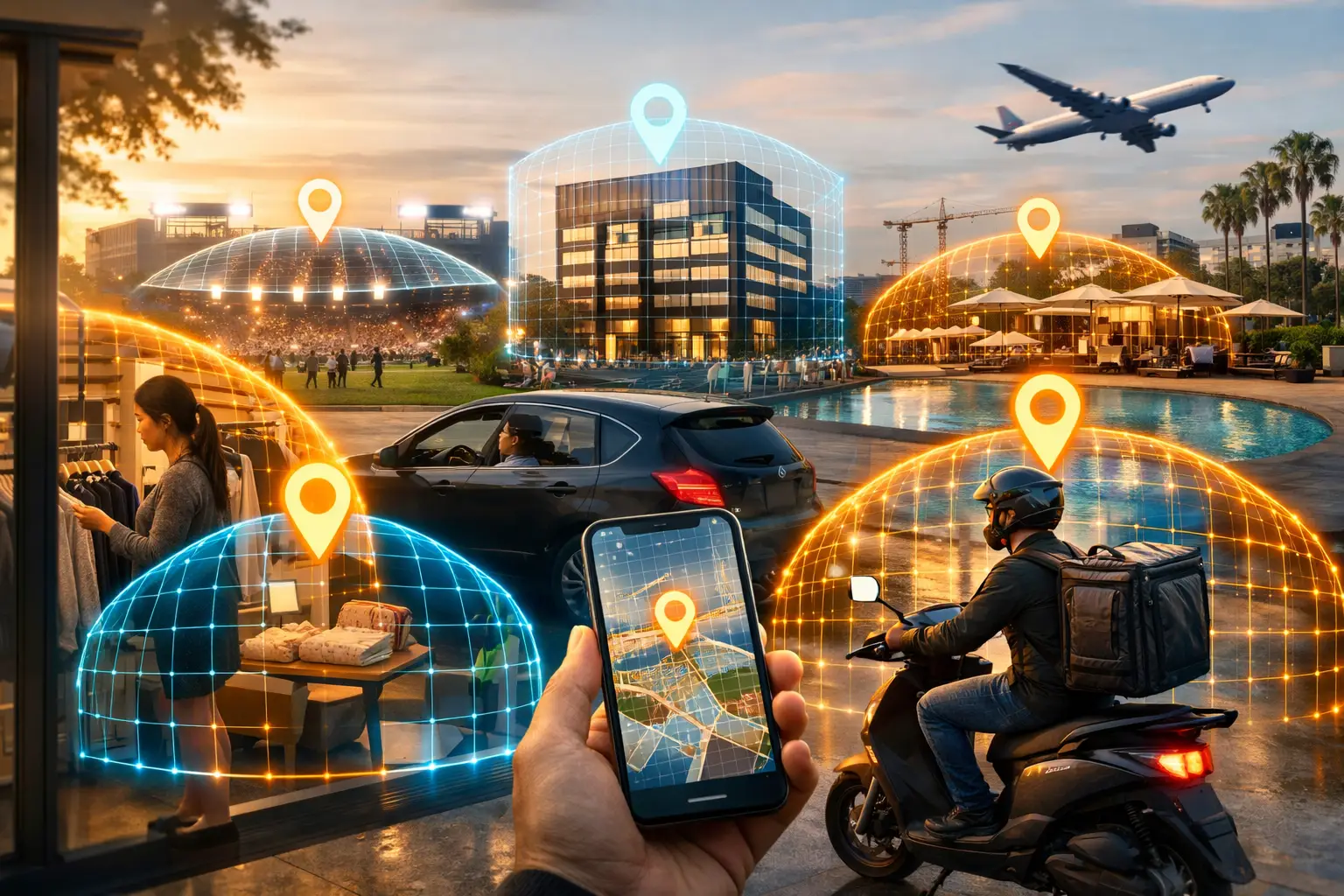

If you are spending to reach “everyone nearby,” you are probably paying for a lot of people who were never going to buy. That is exactly why the top industries using geofencing ads tend to be the ones that care most about local intent, foot traffic, and wasted spend. When you can target people based on actual visits to a specific building, event, neighborhood, or competitor location, your media gets tighter and your message gets more relevant.
That does not mean geofencing is only for massive brands with huge media budgets. In practice, some of the best [use cases] (https://qujam.com/qujam-geofence-advertising-case-studies/) come from local businesses, regional chains, agencies, and service providers that need better control. The common thread is simple: they want to reach the right people based on where they have been, not just where they live.
Why these top industries using geofencing ads get better results
Geofencing works best when location is a strong buying signal. If someone visited a car dealership, attended a home show, walked into a competing gym, or spent time at a medical office, that visit tells you something meaningful. It is often more useful than broad demographic targeting and far more precise than generic radius targeting.
That precision matters because not every business benefits equally. Some industries have short decision windows and high competition. Others have long sales cycles where repeated follow-up across phones, tablets, desktops, and connected TV can keep a brand in front of a qualified audience. The strongest geofencing categories are the ones where physical presence connects clearly to purchase intent.
1. Retail
Retail is one of the easiest fits for geofencing ads because foot traffic and purchase intent are closely linked. A shopper who visited a competitor’s store, a shopping center, or a specialty retailer is already raising their hand. That audience is usually more valuable than a broad local population segment.
For retailers, geofencing can support both conquesting and retention. A furniture store can target visitors to nearby furniture showrooms. A boutique can reach shoppers who attended a local fashion event. A grocery chain can serve ads to people who visited competing stores in a specific trade area. The key is matching the location to the product category instead of fencing giant areas and hoping for the best.
Retail also benefits from creative flexibility. Some campaigns should push a clear offer. Others work better with brand reminders, seasonal messaging, or product category ads. It depends on the margin, buying cycle, and how often customers return.
2. Automotive
Auto dealers have some of the strongest geofencing opportunities because dealership visits are high-intent actions. If a shopper physically visited another dealer, researched nearby lots, or attended an auto expo, that behavior is far more meaningful than a generic in-market audience.
This is one of the top industries using geofencing ads because the value of a converted customer is high. Dealers can afford to be strategic, stay visible across devices, and build messaging around trade-in offers, financing, service specials, or inventory categories. A campaign targeting visitors to competitor dealerships can be especially effective when the creative gives people a reason to compare.
That said, timing matters. Some vehicle buyers move fast, while others spend weeks researching. Auto campaigns usually perform better when they combine immediate follow-up with enough frequency to stay visible during the decision process.
3. Real estate
Real estate is local by definition, which makes geofencing a natural fit. Agents, brokerages, apartment communities, and home builders can all benefit from targeting based on where prospects have actually gone. Think apartment hunters visiting competing complexes, buyers attending open houses, or consumers spending time in neighborhoods with similar price points or housing types.
This approach is especially useful because real estate decisions are tied to place. A person visiting a subdivision, condo development, or leasing office is not casually browsing. They are signaling interest in a very specific market. That lets advertisers tailor messaging around availability, amenities, pricing bands, or neighborhood benefits.
Real estate also works well with longer nurturing windows. Most prospects do not convert the same day, so staying in front of them on display, video, and CTV can help keep your brand in the consideration set.
4. Events and trade shows
Event geofencing is one of the most practical uses of location-based advertising. If you want to reach attendees before, during, or after a conference, festival, fair, convention, or local event, geofencing gives you a way to focus on people who were actually there.
This matters for exhibitors, sponsors, local businesses, and B2B marketers alike. A company can target attendees at an industry trade show and continue serving ads after the event ends. A restaurant can market to people attending a nearby festival. A law firm or healthcare provider can target community event visitors in a relevant service area.
The trade-off is that event campaigns are time-sensitive. You need clean setup, fast launch, and clear post-event follow-up. If the campaign goes live too late or the audience definition is sloppy, the value drops fast.
5. Restaurants and hospitality
Restaurants, bars, hotels, and entertainment venues often live or die on local visibility. Geofencing helps them stop guessing and start targeting based on actual movement. Instead of advertising to a whole zip code, they can target people who visited nearby attractions, stadiums, theaters, convention centers, or competing venues.
This category tends to work best when the offer matches the moment. A hotel might target convention attendees. A restaurant might target visitors to nearby office buildings or nightlife districts. A sports bar might go after fans who attended a game. These are all stronger audience signals than broad local awareness alone.
Hospitality brands also need to be realistic about attribution. Some campaigns drive immediate visits, while others support awareness and future consideration. If you expect every impression to lead directly to a same-day purchase, you may undervalue what the campaign is doing.
6. Home services
For roofers, HVAC companies, plumbers, pest control businesses, landscapers, and remodelers, geofencing can sharpen local outreach in ways traditional digital targeting often misses. These businesses usually serve defined neighborhoods or service areas, and they often compete heavily at the local level.
One smart use case is targeting homeowners in specific communities, subdivisions, or property types that fit the service. Another is targeting people who visited home improvement stores, home shows, or competitor locations. For high-ticket services, that location behavior can help separate active prospects from general local traffic.
Home services campaigns do require some planning. Urgent needs like plumbing differ from considered purchases like kitchen remodeling. The creative, frequency, and campaign length should reflect that. Fast-response services need immediate relevance. Longer-cycle services benefit from sustained visibility.
##7. Fitness, wellness, and membership-based businesses
Gyms, boutique studios, wellness clinics, and membership-driven businesses are strong geofencing candidates because competitor visits are highly useful signals. If someone is already going to a gym, yoga studio, or wellness center, they have demonstrated interest in the category. That makes conquesting more practical than broad prospecting.
This is one of the top industries using geofencing ads because offers are easy to frame and conversion actions are clear. A free class, discounted first month, consultation, or trial membership gives people a concrete reason to switch or test a new option. The best campaigns also account for convenience by focusing on highly specific nearby locations rather than huge surrounding areas.
Where geofencing ads tend to struggle
Not every business should lead with geofencing. If location is a weak indicator of interest, the strategy can feel forced. A fully remote software company with no meaningful physical audience touchpoints may get more value from search, content, or intent-based audience buying.
Geofencing can also underperform when advertisers use it too broadly. Fencing giant areas, relying on weak creative, or treating every visit the same usually leads to wasted impressions. Precision is the point. If the targeting is not tied to a meaningful real-world behavior, results get softer.
How to tell if your industry is a good fit
The best test is not your industry label. It is whether your customer journey includes places that signal intent. Ask yourself where qualified prospects go before they buy, compare, research, or visit a competitor. If those places are specific enough to target, geofencing can probably play a valuable role.
That is where a simpler self-serve approach can make a real difference. You do not need bloated managed-service processes or huge minimums just to target a competitor store, event venue, apartment complex, or neighborhood with precision. You need clean setup, clear reporting, and the ability to adjust campaigns without waiting on someone else.
If your buyers show intent through real-world movement, geofencing is not a niche tactic. It is one of the most practical ways to tighten your targeting and stop paying for audiences that were never a fit in the first place.


