
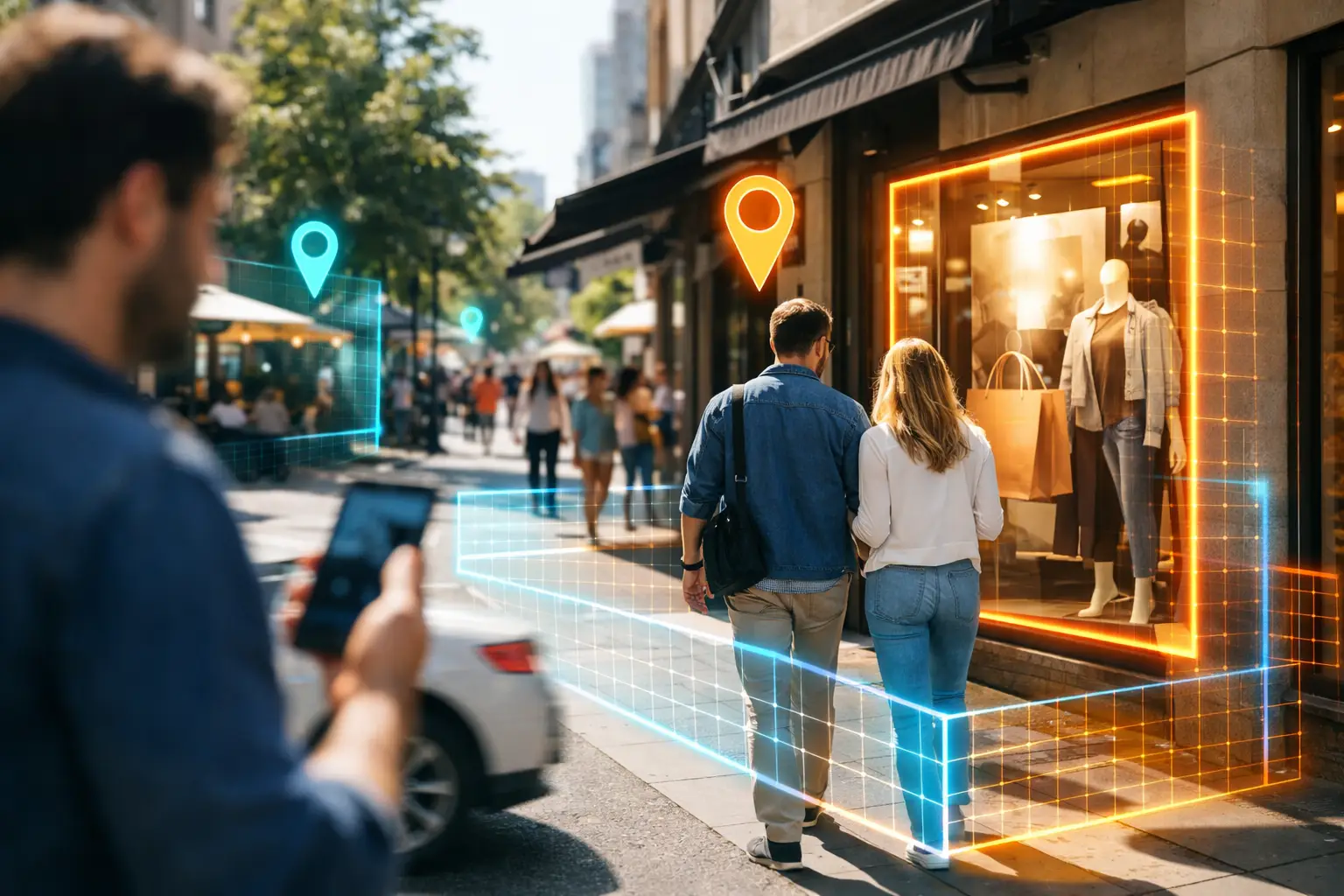

A customer walks into a competitor’s showroom, attends a local home show, or visits a neighborhood your service business covers. They may never search for your company that day. Visit based advertising gives you a way to stay in front of that audience afterward, when they are back on their phones, tablets, computers, or streaming TVs.
So, what is visit based advertising? It is a form of location-based digital advertising that builds an audience from people who physically visited a specific, eligible location or area. Instead of showing ads only to people currently inside that place, advertisers can reach qualifying recent visitors after they leave.
For local businesses, agencies, and multi-location brands, that distinction matters. You are not paying to broadly target an entire ZIP code and hoping the right people see your message. You can focus budget on people who demonstrated real-world interest by showing up at a relevant location.
How visit based advertising works
Visit based advertising starts with a location, often called a geofence or target zone. This can be a specific business, a competitor location, an event venue, a shopping center, a neighborhood, an apartment complex, or a defined service area. The key is precision. A well-built target zone follows the actual footprint of the place you want to target rather than relying on a large radius that may include unrelated traffic.
When a device enters that target area, location signals can be used to identify an advertising audience, subject to applicable privacy rules and data availability. That audience can then receive digital ads later through available programmatic inventory. Depending on the campaign, ads may appear in mobile apps, on websites, before online video, in digital audio environments, or on connected TV.
The visit is the audience signal. The ad does not need to be served while someone is standing in the store or sitting at the event. In fact, follow-up delivery is often more useful because people have time to consider what they saw, compare options, and act.
A simple example
Imagine a local flooring company that wants more estimate requests. Rather than targeting everyone within 10 miles of its showroom, it could build audiences from visitors to relevant home improvement retailers, local renovation events, and newly developed neighborhoods within its service area.
Those visitors are not guaranteed customers. But they have shown a stronger potential connection to flooring than a random household in a broad geographic area. The company can serve a clear ad such as, “Get a free in-home flooring estimate,” then measure whether ad-exposed users later visit its showroom or submit a lead form.
Visit based advertising vs. real-time geofencing
These terms are related, but they are not always used the same way.
Real-time geofencing generally refers to delivering an ad while a person is inside, or very near, a defined location. Visit based advertising uses the visit to create an audience for later ad delivery. Many campaigns use both approaches, but visit-based audiences are often better for campaigns that need repeated exposure over several days or weeks.
For example, an event sponsor may want to reach attendees during the event with a time-sensitive offer. A business looking to win consideration after the event may instead use visit based advertising to continue the conversation after attendees have gone home.
The best choice depends on the offer. Urgent, location-specific promotions can benefit from real-time delivery. Higher-consideration services, local brand awareness campaigns, and competitor-conquesting campaigns often benefit from a visit-based approach because buying decisions rarely happen in one moment.
Why businesses use visit based audiences
The main benefit is reduced waste. Traditional local targeting can be useful, but it is often broad by design. A ZIP code, city boundary, or radius may include thousands of people with no connection to the business you are trying to promote.
Visit-based targeting adds behavioral context to geography. Someone who visited a competitor’s store, a trade event, or a property within your service territory has taken a real-world action. That does not reveal why they visited or whether they will buy, so advertisers should not treat it as certainty. It does create a more relevant audience than geography alone.
It is particularly useful for businesses that need to reach people around specific moments of intent. A franchise operator can support a new location by targeting visitors to nearby complementary businesses. An auto dealer can reach people who visited competing dealerships. An event marketer can keep a brand in front of attendees after the event ends. A local contractor can build awareness among residents in carefully selected neighborhoods.
It also gives agencies a practical way to build distinct audience segments for different clients, offers, and locations without relying on a one-size-fits-all local campaign.
What makes a strong visit based campaign
A precise audience is only one part of the campaign. The ad, offer, timing, and measurement plan need to work together.
Start with the business goal. If you want showroom visits, use creative that gives people a reason to visit, such as a consultation, a limited-time promotion, or a product demonstration. If you want leads, make the next step simple and make sure the landing page matches the ad. An ad that says “Request a quote” should not send people to a generic homepage.
Then choose locations that genuinely indicate relevance. Competitor locations may make sense, but not every nearby business is a good target. A landscaping company might target homes in defined neighborhoods and relevant garden retail locations. A restaurant could focus on nearby event venues, hotels, or entertainment districts. Specificity matters more than simply creating the largest possible audience.
Campaign timing matters too. A short event can create an audience quickly, while a neighborhood or competitor-location campaign may need more time to build frequency and performance data. Avoid judging results after only a few days, especially if the audience is narrow or the budget is modest.
Finally, use creative built for local action. Mention the city or neighborhood when it helps. Show the service, product, or offer clearly. Keep the message easy to understand on a small screen. A clever ad is not enough if people cannot tell what you sell or what to do next.
How to measure results without guessing
Clicks are useful, but they are not the whole story. Location-based campaigns can influence people who see an ad, remember it, and later visit a business, search for the brand, call, or convert through another channel.
A practical measurement plan may include impressions, reach, click-through rate, website actions, calls, lead submissions, and store or conversion-zone visits where available. A conversion zone is a defined area around your own business location or another meaningful destination. When used correctly, it can help show whether exposed audiences later appeared at that location.
No single metric proves every outcome. A campaign focused on local awareness may earn modest click-through rates while still producing strong reach and lift in on-site visits. A lead-generation campaign may care more about qualified forms and cost per lead than total impressions. Set the success metric before launch so the campaign is evaluated against the job it was hired to do.
Common mistakes to avoid
The biggest mistake is treating visit based advertising as a shortcut to guaranteed sales. A location visit indicates potential relevance, not a confirmed purchase decision. Better results come from combining a thoughtful audience with a credible offer and enough campaign duration to generate useful data.
Another mistake is drawing target zones too broadly. If a geofence covers a whole shopping district when you only care about one store, the audience can become less relevant. Hyper-local targeting works best when the boundaries reflect the actual location, event footprint, building, or neighborhood you mean to reach.
Advertisers can also overcomplicate the setup. You do not need dozens of target locations on day one. Start with the few places most connected to your goal, create clear audience segments, and review performance. From there, keep what works and adjust what does not.
Self-serve platforms such as Qujam make that testing process easier by giving advertisers direct campaign control, live reporting, and the ability to refine target zones without waiting on a managed-service team.
Is visit based advertising right for your business?
Visit based advertising is a strong fit when physical location is connected to customer intent. That can include retail competition, local events, service neighborhoods, commercial properties, and other real-world places tied to how your customers shop, compare, or make decisions.
It may be less useful when there is no meaningful location signal to build from, when the target audience is extremely small, or when your offer is too broad to benefit from added precision. In those cases, wider geographic, contextual, search, or social targeting may complement the campaign better.
The smart question is not whether visit based advertising can reach an audience. It can. The better question is whether you can identify a real-world place that meaningfully connects to the customer you want next. When you can, your advertising can become more relevant, more measurable, and far less wasteful.
Key Takeaways: What is Visit-Based Advertising?
-The Definition: Visit-based advertising (or historical geofencing) captures the mobile device IDs of people who physically visit a specific target zone so you can serve them digital ads after they leave.
-Versus Real-Time Geofencing: Real-time geofencing attempts to serve an ad while a person is physically inside a boundary. Visit-based advertising retargets them later across their phones, tablets, and Connected TVs (CTV) when they actually have time to engage.
-High-Intent Targeting: It eliminates the waste of broad ZIP code targeting by focusing only on people who have shown physical intent (e.g., visiting a competitor’s store or a local trade show).
-Measuring Success: Advertisers measure ROI by setting up “Conversion Zones” around their own storefronts to track how many ad-exposed users actually walk through their doors.


