
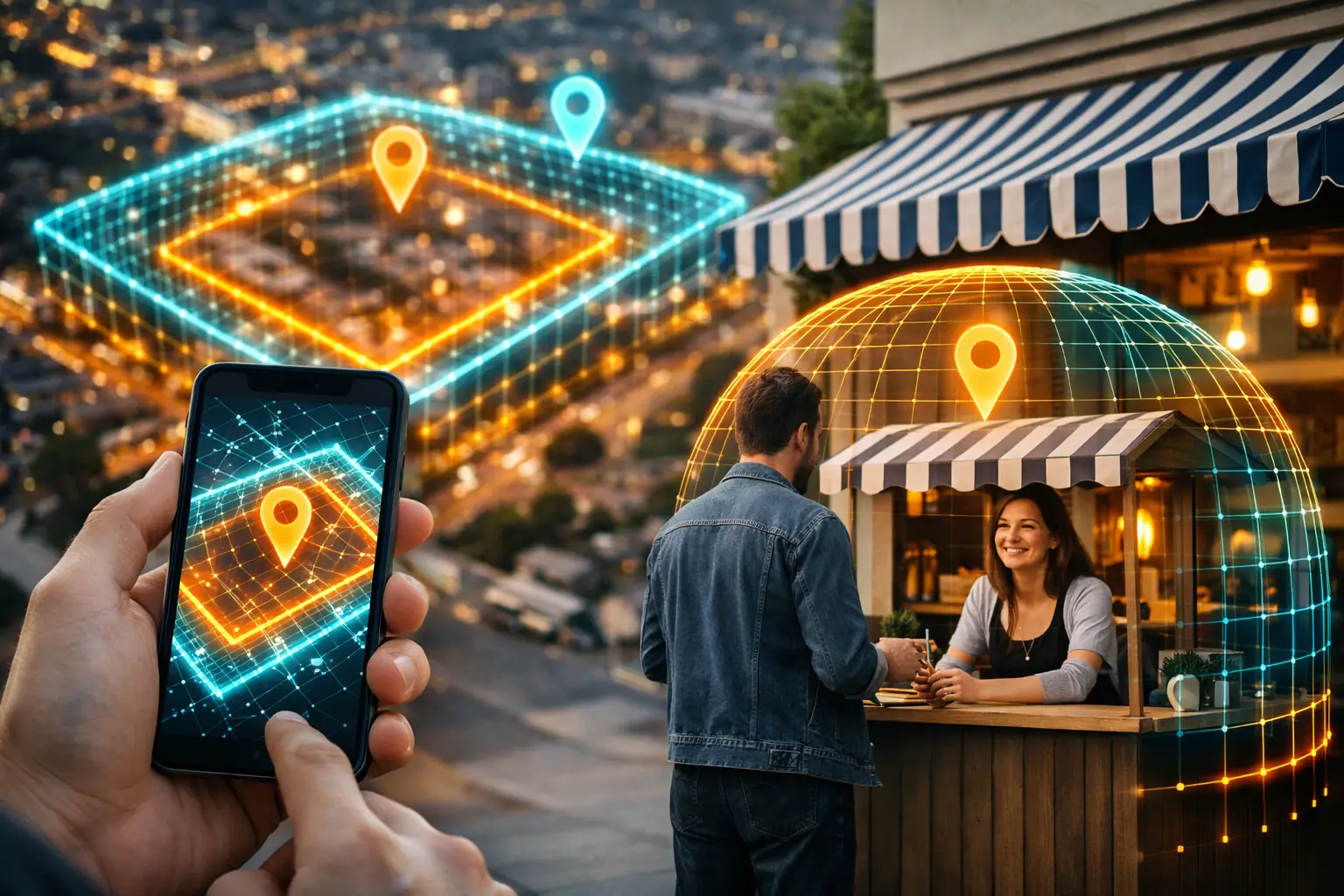

A gym opens two blocks from your studio. A homeowner visits a local home show. A shopper walks into a competitor’s store before deciding where to buy. These are moments when broad local advertising can waste budget, while hyper-local targeting can put your message in front of people who have shown real-world intent.
So, how does geofence advertising work for small businesses? It uses a digital boundary around a specific physical location to build an audience of devices seen there, then serves ads to that audience later as they browse sites, use apps, stream content, or listen to digital audio. The goal is not to advertise to everyone in a ZIP code. It is to reach people connected to places that matter to your business.
How Geofence Advertising Works for Small Businesses
A geofence is a custom digital shape placed around a real-world location. Depending on the campaign, that location could be a competitor storefront, an event venue, a neighborhood, a shopping center, a business complex, or your own location. Unlike broad radius targeting, a well-built geofence can follow the actual footprint of the area you want to target.
When a mobile device is observed within that defined area through available location-enabled ad inventory, it may be added to the campaign audience. Ads are not necessarily served the second someone walks through the door. Instead, the campaign reaches eligible devices after the visit, when those devices appear across available digital ad inventory.
That distinction matters. Geofencing is not a text-message blast to everyone standing nearby. It is an audience-building and ad-delivery method that connects physical visits with digital advertising.
The basic campaign flow
The process usually follows a simple sequence. First, you choose the location or locations that signal likely interest. Next, you set the geofence boundaries, create ads, choose a budget, and launch the campaign. As devices are observed within those boundaries, your audience grows. Your ads can then appear across display placements, video, connected TV, and digital audio inventory, depending on the channels selected.
For example, a local auto repair shop may geofence several nearby dealership service centers. A homeowner who visits one of those locations may later see an ad promoting the repair shop’s faster appointment availability or lower-cost maintenance options. A wedding venue may target attendees at a bridal expo, then follow up with video ads that showcase its space after the event ends.
The location is the signal. The ad is the follow-up.
Why Precise Boundaries Matter
Small businesses rarely have the budget to pay for impressions that have little chance of leading anywhere. That is why a carefully drawn geofence is more valuable than a large circle around a landmark.
A radius around a competitor could capture unrelated homes, businesses, roads, or neighboring stores. A hyper-specific boundary focuses on the relevant building, event area, storefront, or portion of a complex. That can reduce wasted impressions and make the audience more meaningful.
Precision is especially useful when the location itself reflects intent. Someone visiting a trade show has shown interest in that industry. Someone visiting a competitor may be actively comparing options. Someone who spends time in a neighborhood may be a strong prospect for a local service business that operates there.
Still, more precise is not always better if it makes the audience too small. A single small storefront may not generate enough audience volume for a campaign to deliver consistently. In that case, it can make sense to combine several relevant locations, target a larger event, or run the campaign for a longer period. The right setup balances relevance with enough scale to generate impressions and results.
What Small Businesses Can Target
The best geofence campaigns begin with a practical question: where do your future customers physically go before they need what you sell?
A restaurant might target nearby entertainment venues, hotels, office buildings, or event spaces. A flooring company could target home improvement stores, builder showrooms, and neighborhoods where it provides service. A franchise operator might build separate campaigns around competitor locations for each market. An event sponsor can target an event footprint, then keep its message in front of attendees after the event.
Your own business location can also be useful. A geofence around your storefront can help support repeat visits, seasonal offers, or cross-selling. It is not a replacement for good customer service or a clear offer, but it can keep your brand visible after someone has already shown interest.
The strongest location choices are usually tied to a real business reason. “People nearby” is broad. “People who visited these five competitor locations in the past 30 days” is a clearer audience with a clearer message.
Choosing the Right Ads and Offer
Geofencing gets the right audience closer to your message. It does not fix a vague message.
Your creative should answer the question a prospect is likely asking after visiting the targeted location. If you target a competitor, avoid generic brand language and lead with a specific reason to consider you: a limited-time offer, faster scheduling, local expertise, transparent pricing, a free estimate, or a product difference that matters.
Display ads are useful for repeated local visibility and simple calls to action. Video can demonstrate a service, show customer results, or make a local brand more memorable. Connected TV works well when you want broader household-level awareness around a defined audience. Digital audio can reinforce a message while people are commuting, exercising, or listening to podcasts.
You do not need every format at once. For many small businesses, one clear offer and a well-designed display or video campaign is a better place to start than spreading a modest budget across too many channels.
Setting a Budget That Can Learn
Geofence advertising is often more accessible than small businesses expect, but it still needs enough budget and time to collect useful data. An audience built from physical visits takes time to develop, particularly when targeting a small number of locations.
Start with a campaign window that matches your buying cycle. A restaurant promotion may need a short, timely push. A contractor, legal office, or business-to-business company may need several weeks of consistent exposure before prospects take action. If your service has a longer decision cycle, do not judge the campaign after only a few days.
Budget decisions should also reflect audience size. A larger group of target locations can support more ad delivery. A narrow campaign focused on one venue may require patience and may be better suited to a time-sensitive event strategy. Frequency matters, too. Seeing an ad once may create awareness, but repeated exposure can be needed before someone searches, calls, or visits.
A self-serve platform such as Qujam gives advertisers more control here. You can build the location list, adjust targeting, manage spend, and monitor delivery without waiting on a managed-service team to make every change. That is useful when an event date shifts, a new competitor opens, or an offer needs to change quickly.
Measuring Whether It Is Working
Clicks are one signal, but they are not the whole story for a location-based campaign. Many people see an ad, remember the business, and later search your name, visit your site directly, call, or walk in. That behavior will not always appear as a direct click.
A better measurement plan combines several indicators: impressions and reach show whether the campaign is delivering; click-through activity shows immediate engagement; website actions reveal interest; and conversion zones can help measure visits to a physical location after ad exposure. If your business tracks calls, form fills, bookings, coupon redemptions, or sales by campaign, include those signals too.
Foot-traffic reporting can be valuable, but treat it as directional marketing data rather than perfect proof that an ad caused every visit. Seasonal demand, promotions, weather, word of mouth, and other advertising can all affect outcomes. The most useful question is whether the campaign is contributing to a measurable lift against your business goal.
Privacy and Expectations to Keep in Mind
Geofence advertising should be handled responsibly. Campaigns rely on privacy-conscious location data practices and available advertising inventory, not on personally identifying people by name. Advertisers receive campaign-level performance information, not a list of individuals who entered a location.
Delivery can also vary. Not every person who visits a geofenced location will be available to reach, and not every device will generate the same amount of ad exposure. Ad inventory, device settings, audience volume, campaign duration, and budget all influence results. Honest expectations lead to better campaign decisions than promises of guaranteed reach or sales.
Start With One Location Strategy You Can Explain
Before launching, write one sentence that explains the campaign: “We want to reach people who visited these local competitor stores with an offer that gives them a reason to choose us.” If that sentence is clear, your locations, creative, budget, and reporting are much easier to align.
Start focused, watch the data, and make changes based on what the campaign is actually showing you. Geofence advertising works best when it turns a real-world signal into a useful next conversation with the right local customer.


