
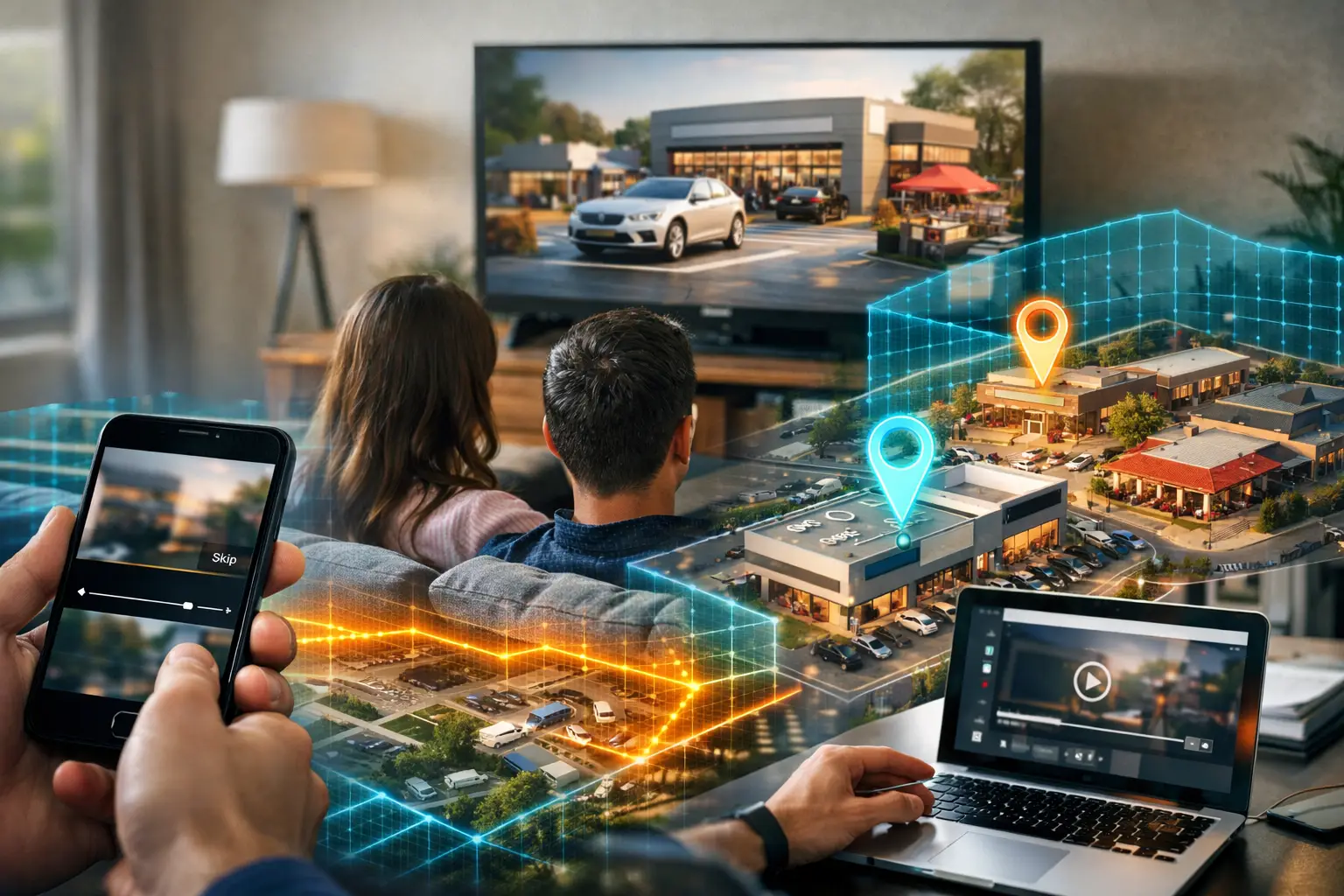

A 15- or 30-second video can do more than explain what you sell. It can put your business in front of people at an optimal time in their decision making process at a localized level through internet video content. That is the real opportunity behind video preroll campaigns: combining sight, sound, motion, and precise audience targeting without paying for impressions that have little chance of turning into customers.
For a local business, franchise group, agency, or event marketer, the question is not simply whether video works. It is whether the campaign reaches the right people often enough to be remembered, without becoming expensive or repetitive. The answer depends on campaign structure, creative, location strategy, and how you define success before launch.
What are video preroll campaigns?
Video preroll on Qujam is a video ad that plays before or during digital video content. You may see it before a news clip, a how-to video, a sports highlight, or programming within an ad-supported streaming environment. Most preroll ads run for 15 or 30 seconds, though shorter formats can also be useful when the message is simple.
Unlike a static display ad, video gives a business room to show the product, location, people, process, or result. A home services company can show a technician arriving on time. A restaurant can make a signature dish look worth the drive. A local retailer can show a limited-time offer and make the next step clear.
That said, preroll is not a magic format. Viewers can skip some ads, ignore weak messaging, or see the same creative too often. Good results come from matching a concise message with an audience that has a genuine reason to care.
Why location precision changes the value of video
Broad video targeting can build awareness, but it can also waste budget. A business serving a handful of neighborhoods does not necessarily need to advertise across an entire city, county, or ZIP code. Those large areas often include plenty of people who are outside the service area, unlikely to visit, or irrelevant to the offer.
Hyper-local targeting gives advertisers a different option. Instead of relying on a radius or a broad postal area, a campaign can focus on highly specific places such as a competitor location, a neighborhood, an apartment complex, a convention venue, a retail center, or an event. The business can then serve ads to people associated with those real-world locations across their connected devices, including phones, tablets, computers, and TVs.
This is especially useful when proximity and intent matter. A fitness studio may want to reach people who visit nearby retail and lifestyle destinations. A dealership could build awareness around a competing dealer’s location. An event sponsor can continue its message after attendees leave the venue. A service company can focus on the neighborhoods it can actually serve well.
Precision does come with a trade-off: a smaller audience can limit scale. If the target area is very narrow, the campaign may need more time, a broader set of related locations, or a higher frequency cap to generate meaningful reach. The goal is not to make the geofence as small as possible. It is to make it specific enough to reduce waste while still giving the campaign enough qualified volume.
Start with one business outcome
The strongest video preroll campaigns begin with a single, practical goal. Trying to drive awareness, website visits, calls, store traffic, and immediate sales with one short ad can produce a message that says too much and accomplishes too little.
For awareness, prioritize a memorable brand, location, and reason to choose you. For lead generation, lead with a clear problem you solve and make the call to action easy to follow. For local traffic, show the location, offer, and timing early. If you are promoting an event, make the date and venue impossible to miss.
Your measurement plan should follow the objective. A campaign designed for local visibility may be judged by reach, completed views, and frequency. A lead-focused campaign should also watch website visits, form submissions, calls, or other conversion actions. When possible, set up a conversion zone around your own business location to understand whether ad exposure is connected to visits.
Build the audience before you build the ad
Creative matters, but audience strategy determines whether that creative gets a fair chance. Before producing a video, identify the physical places that signal likely interest. It’s extremely important to have well defined target audience and personas. The creative for the video preroll campaigns should be designed with those people in mind and possibly what they are doing at your geofences locations.
A local furniture store might target new residential developments, nearby home improvement stores, and competitor showrooms. A family entertainment venue might focus on neighborhoods with its best customer base, schools or community event locations where appropriate, and competing attractions. A multi-location brand can create separate campaigns by market so each store uses relevant locations, offers, and reporting.
Then decide whether you are prospecting, retargeting, or doing both. Prospecting introduces your brand to people connected to selected locations. Retargeting follows up with people who have already engaged with your website or ads, depending on the campaign setup and available audience options. Prospecting is usually better for expanding awareness. Retargeting is more useful when the offer requires multiple touches before action.
Keep the audiences distinct when you can. If every prospect and past visitor sees the same message, you lose the chance to make the second interaction more relevant. A first ad may introduce the business. A follow-up ad may feature a testimonial, limited-time offer, or direct invitation to book.
Make the first five seconds earn attention
Most local advertisers do not need cinematic production. They need clarity. The opening seconds should show what you offer, who it is for, or why the viewer should care. Do not spend half the ad on a slow logo reveal and save the actual message for the end.
A useful 15-second structure is simple: open with the problem or benefit, show proof or the experience, and finish with one direct action. For example, a roofing company might open with storm damage, show its local team at work, and end with “Request your free estimate today.” A restaurant might show its most recognizable food immediately, mention the neighborhood location, and invite viewers to order or visit.
Include branding early, not just in the final frame. Use readable on-screen text because some people watch without sound. Keep the voiceover conversational. And make sure the call to action matches the landing page or destination. If the ad says “Get a quote,” do not send visitors to a generic homepage where they have to hunt for the form.
Control frequency so awareness does not become annoyance
Frequency is the average number of times a person sees an ad. Too little frequency can mean the message never sticks. Too much can make a small audience feel overexposed, especially when the same video runs for weeks.
There is no universal number that works for every campaign. A short event promotion may justify more concentrated exposure because the deadline is close. A longer-term local awareness campaign usually benefits from steadier delivery and creative rotation. Watch frequency alongside completed video views, click activity, site engagement, and conversions. If frequency rises while response fades, refresh the creative or expand the qualified audience.
Budget also affects this decision. A limited budget spread across too many locations, audiences, and creative variations may never produce enough delivery to learn what works. Start with the locations that matter most, run long enough to gather usable data, then expand from evidence rather than assumptions.
On Qujam, we have human and machine driven frequency optimizations implemented, but also give our users additional control through simple, frequency and reach goals.
Read performance in context
Video metrics can be useful, but they need interpretation. Impressions tell you how often the ad was served. Video completion rate shows whether viewers watched through. Click-through rate can indicate interest, but it should not be the only scorecard. Many people see a local video ad, remember the name, and later search for the business directly or visit in person without clicking.
Compare results by location group, creative, device type, and campaign objective. If one set of competitor locations drives more site activity than another, shift budget toward it. If a 15-second video outperforms a 30-second version on completions but produces fewer conversions, the shorter version may be better for awareness while the longer version works better for retargeting.
Transparent reporting matters here. You should be able to see what is running, where budget is going, and what the campaign is producing without waiting for a monthly recap. A self-serve platform such as Qujam can make it easier to adjust targeting, monitor delivery, and act on results while the campaign is still active.
Give the campaign time, then make a decision
Do not judge a video campaign after a day or two of delivery. Local audiences are often smaller by design, and video typically works through repeated, relevant exposure rather than one immediate click. Let the campaign gather enough impressions to reveal patterns, then change one meaningful variable at a time: the target locations, creative, call to action, or budget allocation.
The best next step is usually not a bigger audience. It is a sharper one. Put your next video in front of people who are more likely to recognize the need, remember the message, and have a real path to becoming customers.


