
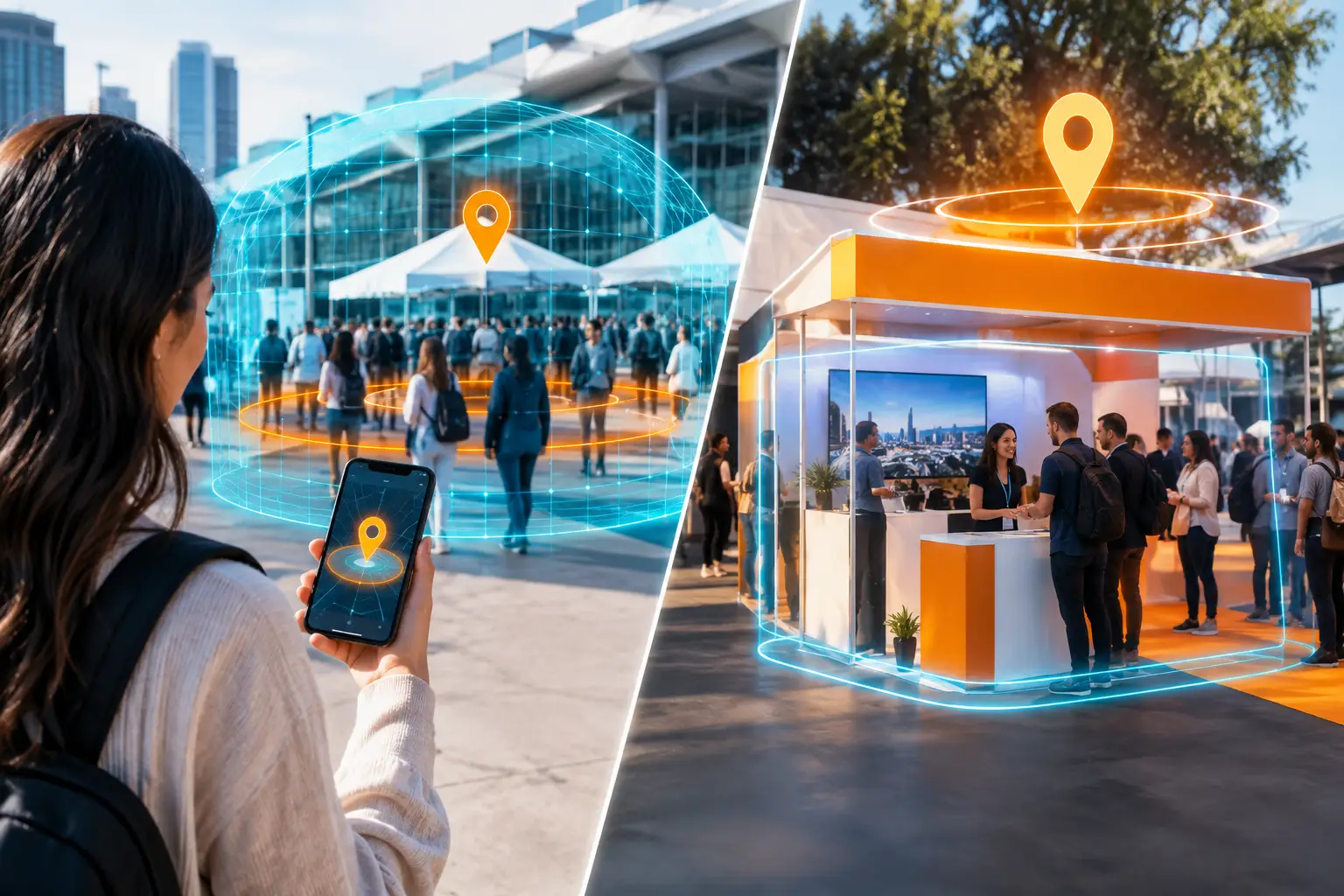

Sponsoring and having a presence at an event is a wonderful way to get your brand in front or and interact with people, but there is no way to meet the majority of the people at an event and collect their contact information. That is where event geofencing versus event sponsorship becomes an interesting topic.
Both tactics can put your business in front of a valuable audience. The difference is how they earn attention, how much control you retain, and what you can measure once the event is over. For a local business, franchise, agency, or lean marketing team, those differences can determine whether an event campaign produces real leads or simply a nice-looking recap slide.
Event Geofencing Versus Event Sponsorship: The Real Difference
Event sponsorship is a paid association with an event. You might sponsor a conference, festival, trade show, tournament, networking event, or community gathering. In return, the organizer may offer logo placement, an exhibitor space, stage mentions, email inclusion, tickets, social posts, or category exclusivity.
Its biggest strength is credibility and on site access to event goers. When a respected local event places your brand beside its programming, attendees may see you as part of the community rather than another advertiser trying to interrupt them. Sponsorship also creates opportunities that ads alone cannot replace, such as face-to-face conversations, product demonstrations, sampling, and relationship building.
Event geofencing is different. An advertiser draws a precise digital boundary around an event venue or custom event footprint. Privacy-compliant mobile location signals from devices observed within that area can help build an audience for a follow-up ad campaign. Those ads can appear after the event across available mobile, desktop, streaming TV, video, audio, and display inventory.
In plain terms, sponsorship helps you be present at the event and add great credibility and connectivity to the event. Event geofencing helps you stay present during and after the event digitally regardless if you sponsored the event or not.
That does not mean geofencing is a substitute for every sponsorship. If your goal is to support a charity, build local goodwill, meet partners, or put salespeople in the room with buyers, sponsorship can be the right call. If your goal is to reach event attendees efficiently, extend your message beyond a single day, and track downstream actions, geofencing often gives you more control. The ideal scenario is often to leverage both when possible.
What You Are Actually Buying
With sponsorship, you are buying access, visibility, and association. The package is usually fixed by the organizer. A top-tier sponsor may receive a banner, a speaking slot, a booth, and a set number of emails. A smaller sponsor may get a logo on a webpage and event signage. The value can be substantial, but it depends heavily on the organizer’s audience quality and execution.
With event geofencing, you are buying targeted media delivery. You choose the event footprint, campaign dates, ad formats, budget, and message. You can promote an offer before the event, run a timely message during it, and retarget the captured audience afterward. You are not limited to the organizer’s email list, sponsor package, or on-site signage plan.
This is why a small business may find a modest geofencing campaign more practical than an expensive presenting sponsorship. Instead of paying for broad visibility that may or may not reach the right people, the business can focus spend on people who were physically present at a relevant event.
There is a trade-off. Geofencing does not give you the public endorsement or physical presence that comes with a sponsorship. Attendees may see your ads, but they will not shake hands with your team or remember your logo from the main stage unless you create a strong enough message to earn that attention.
Reach Is Not the Same as Attention
Event organizers often promote attendance numbers, and those numbers matter. Still, a large attendance figure does not tell you how many people noticed a sponsor, understood its offer, or were ready to buy. A logo placed among dozens of other logos may create awareness, but it can be hard to turn that awareness into action.
Geofencing lets advertisers tailor creative to the audience and the moment. A home services company could target attendees at a regional home show with a seasonal offer. A restaurant group could reach people leaving a downtown food festival with a same-week promotion. A B2B company could retarget trade show attendees with a demo invitation after they return to the office.
The strongest campaigns make the event connection clear without being awkward. “Saw us at the expo?” can work if you were actually there. If you were not a sponsor or exhibitor, a more useful approach may be to focus on the attendee’s likely interest: “Planning your next project? Get a local estimate this week.”
Creative still matters. A precise audience will not rescue an unclear offer, a weak landing page, or an ad that looks like every other ad in the feed. Use one message, one action, and a reason to act soon.
Measurement Changes the Conversation
Sponsorship reporting often centers on estimated impressions, attendance, social reach, website mentions, or leads collected at a booth. These signals are useful, especially for awareness and community goals. But they can be inconsistent across events, and they do not always reveal whether the sponsorship drove a visit, inquiry, or sale.
Event geofencing can add more direct campaign reporting. Advertisers can review delivery, frequency, clicks, video completion, and engagement by creative or channel. If the goal is physical traffic, a conversion zone can measure privacy-compliant visits to a business location after ad exposure. That gives marketers a clearer way to compare event audiences, creative messages, and budgets.
Measurement is not magic. A store visit does not prove every visitor made a purchase, and no digital campaign should claim perfect one-to-one attribution. It does, however, give a small team a more useful signal than guessing whether a banner near the registration desk worked.
Before launching either tactic, decide what success means. For a sponsorship, it may be qualified conversations, trial signups, or community visibility. For geofencing, it may be landing-page visits, lead forms, appointment requests, or foot-traffic lift. A campaign without a defined outcome is difficult to improve.
When Sponsorship Is the Better Investment
Sponsorship deserves the budget when the relationship is the product. This is common with local causes, industry associations, niche conferences, and events where buyers expect to meet vendors in person. It is also useful when your business needs to establish credibility in a market where it is not yet known.
It can be particularly effective when the package includes meaningful access, not just logo placement. A booth near a relevant session, a speaking opportunity, a category-exclusive presence, or a well-promoted attendee offer can create value that programmatic ads cannot reproduce.
Ask the organizer direct questions before signing: Who attends? How many are expected? What are the sponsorship deliverables? Where will your brand appear? Can you collect opted-in leads? Can you offer a promotion to attendees? If the answers are vague, the sponsorship may be priced on prestige rather than outcomes.
When Event Geofencing Is the Better Investment
Geofencing is often the better fit when you want flexibility, controlled spend, and a campaign that can continue after the event closes. It is especially useful when an event is relevant to your customers but a booth or sponsorship package is outside your budget.
It also works well for competitive situations. If prospects are attending a trade show filled with alternatives, a post-event campaign can keep your offer in the consideration set. The goal is not to ambush attendees. The goal is to show a relevant message to people who have already demonstrated interest in a category, location, or local activity.
Additionally, it’s a great way to have a presents at events where you simply can’t attend logistically. This exposed your brand to a large population of desirable event goers than sponsorships alone.
A self-serve platform such as Qujam makes this approach more accessible for advertisers that do not want a long contract or a large monthly minimum. You can define a custom event footprint, choose the channels that fit your message, set a budget you can defend, and monitor reporting in real time.
The Strongest Plan Often Uses Both
For high-value events, sponsorship and geofencing do not have to compete. Sponsorship can create the on-site credibility, while geofencing can extend the message before and after the event. The key is to give each tactic a separate job.
Use sponsorship to create human interaction and visible association. Use geofencing to promote a booth appointment, reinforce the offer after the event, and guide interested people to a next step. Keep the creative connected so attendees encounter one clear story rather than disconnected messages.
Start with the outcome you need, not the tactic that sounds more impressive. If you need people to trust you in a room, show up. If you need to keep reaching the right audience after the room empties, build the event footprint and let the campaign keep working.
Key Takeaways: Geofencing vs. Sponsorship
- The Core Difference: Sponsorship buys physical access and brand credibility at a venue. Event geofencing buys targeted digital media delivery to the mobile devices of people who attended.
- The Ad-Tech Landscape: Enterprise programmatic platforms and managed-service agencies often require high minimums to geofence events. Self-serve DIY platforms like Qujam eliminate these barriers.
- Compliance Check: If sponsoring an event in states with strict privacy laws (like Oregon, Virginia, Maryland, New Jersey, or Connecticut), precision polygon geofencing is legally restricted. Qujam’s Hyper-Grid Geofencing provides a 100% compliant alternative.
- The Hybrid Strategy: The highest-converting campaigns use sponsorship for face-to-face relationship building, and geofencing to retarget attendees across Connected TV (CTV) and display ads after they return home.


