
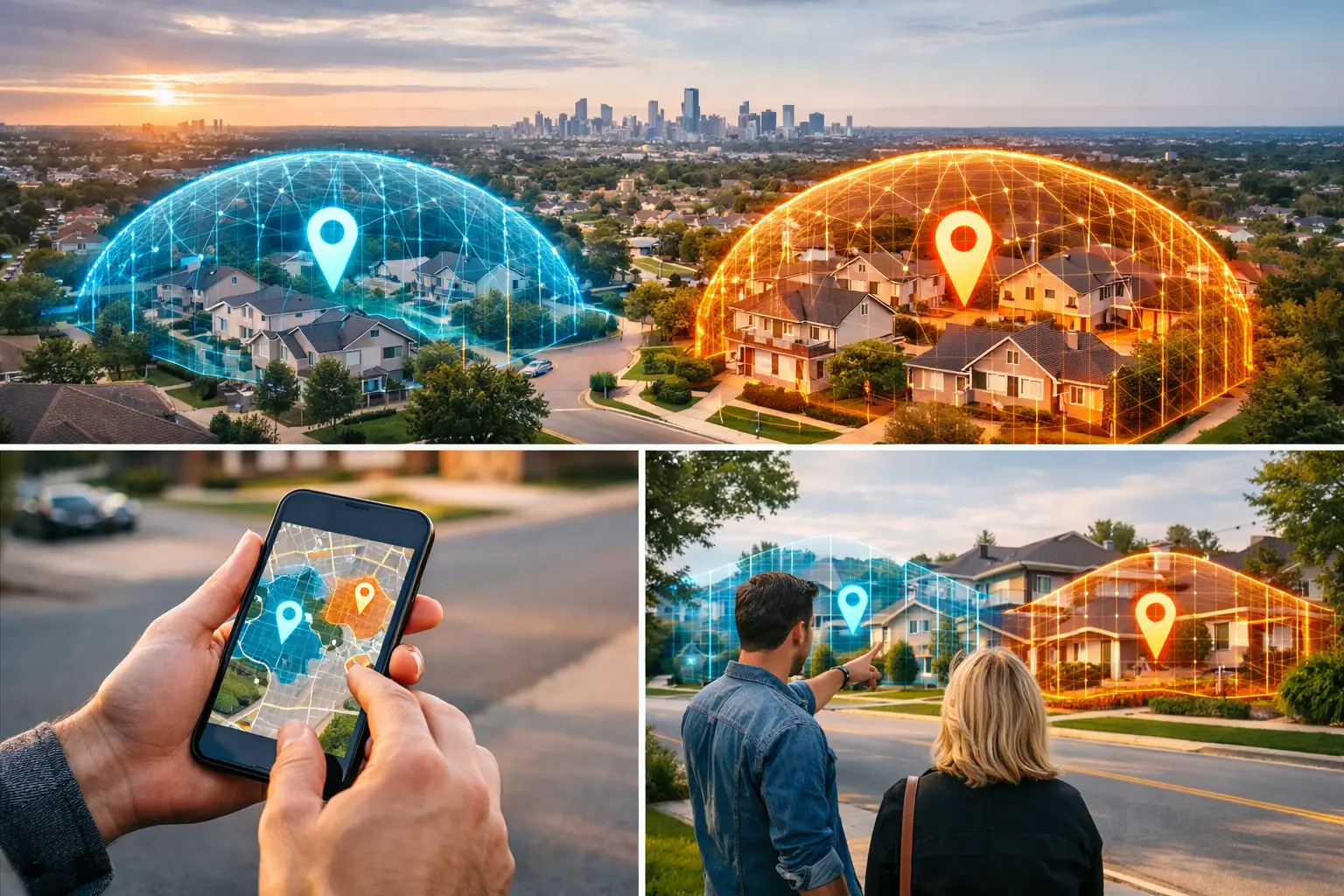

A neighborhood is not a ZIP code. It is a collection of streets, homes, routines, and local buying decisions. That distinction is the starting point for learning how to run neighborhood geofencing effectively. Instead of paying to reach everyone in a broad radius, you can focus ad delivery on the specific residential areas, subdivisions, apartment communities, or blocks most likely to need what you sell.
For a local business, that precision can mean less wasted spend and clearer reporting. For an agency, it can mean building repeatable campaigns around service areas, new locations, competitor activity, or high-value communities. The campaign only works, though, when the geography, offer, creative, and measurement all line up.
Start with the business goal, not the map
The temptation is to open a map and fence every neighborhood near your business. That usually creates a larger audience than you need and a campaign that is difficult to evaluate. Start with the action you want to influence.
A home services company may want estimate requests from homeowners in a specific subdivision. A restaurant opening a second location may want to build familiarity in nearby neighborhoods before launch. A local retailer may want to reach residents in communities where its best customers already live. Those are different goals, so they deserve different boundaries, messages, and conversion metrics.
Be specific about what success looks like before choosing the area. It might be website form fills, calls, online orders, directions, visits to a store, or simply efficient local reach during a short promotion. Awareness can be a valid goal, but it should still have a defined audience and a reasonable way to assess whether the campaign delivered.
How to run neighborhood geofencing with precise boundaries
Neighborhood geofencing works best when the boundary matches a real-world area people recognize. Draw a polygon around the specific streets, development, complex, or group of blocks you want to target. Avoid relying on a radius or a broad city-level audience when the goal is hyper-local relevance.
The right fence size depends on the business. A contractor serving higher-value homes may target several individual communities with separate campaigns or ad groups. A neighborhood restaurant may select nearby residential areas that are close enough to support repeat visits. An event marketer might focus on neighborhoods surrounding a venue and use different creative for each group.
Smaller is not automatically better. A fence that is too narrow may not generate enough eligible devices to support steady delivery. A fence that is too broad may dilute the message and spend impressions on people outside your ideal market. Think of each boundary as a business decision, not just a shape on a screen.
When possible, separate neighborhoods that have different value or different reasons to buy. For example, a landscaping company could use one campaign for an established neighborhood with large yards and another for a newer community where seasonal cleanup is the stronger offer. This gives you cleaner performance data and prevents one audience from hiding the results of another.
Build exclusions before launch
Precision also means deciding where not to advertise. Exclude areas that are outside your service territory, unlikely to convert, or likely to create irrelevant impressions. If a business only serves certain counties, crossing the line into an adjacent community just because it is nearby can produce leads the team cannot fulfill.
Consider operational reality as well. If a location has limited delivery capacity, appointment availability, or staffing, do not direct a successful campaign toward an area you cannot serve well. Geofencing should make demand more useful, not simply create more of it.
Match the offer to neighborhood intent
A neighborhood boundary gets attention only when the message gives people a reason to act. Generic ads such as “Quality Service Near You” are safe, but they rarely give a resident a reason to choose you now. Use an offer that fits the customer journey and the business category.
For a newer business, an introductory offer, grand-opening incentive, or local awareness message may make sense. For an established service company, a seasonal promotion, free estimate, financing message, or limited appointment availability can be more direct. The key is to avoid pretending that a neighborhood-level campaign knows personal details about individual residents. Keep the message locally relevant without making it feel invasive.
Your landing page should continue the same conversation. If the ad promotes a neighborhood-specific installation offer, send people to a page that explains the offer and makes it easy to request service. Sending every click to a generic homepage adds friction and makes it harder to identify what the campaign actually produced.
Creative should be simple enough to understand quickly on a phone. Lead with the primary benefit, use a clear call to action, and make sure the business name and contact path are easy to find. Run multiple creative versions when budget allows. One version can emphasize price or an offer, while another can focus on convenience, quality, speed, or local trust.
Choose channels based on the job they need to do
Geofencing is an audience strategy, not a single ad format. Display ads can support broad, cost-efficient awareness and website traffic. Video can explain a more involved service or reinforce a strong visual brand. Connected TV can put a local message on the largest screen in the home, while digital audio can reinforce frequency during commutes, workouts, and errands.
You do not need every channel for every campaign. A modest budget usually performs better with a focused plan than with a thin layer of spend across every format. If the goal is immediate lead generation, start with the channel and landing experience that make response easiest. If the goal is building recognition before a retail opening, combine visual reach with enough frequency to make the name familiar.
Device extension can also matter. A person identified within a targeted neighborhood may use multiple connected devices. Reaching qualified local audiences across mobile, desktop, tablet, and TV can help maintain message consistency beyond a single moment or screen.
Set a budget that gives the campaign time to learn
Neighborhood campaigns need enough budget and duration to establish delivery and reveal patterns. A very small budget spread across too many fences, channels, and creatives may produce little more than scattered impressions. Narrow the campaign first, then expand based on evidence.
As a practical approach, prioritize a handful of neighborhoods that best match your customer profile. Run for long enough to observe delivery, click engagement, site behavior, and conversion activity. If the business has a short promotional window, concentrate spend during the days and times when the offer is most relevant rather than trying to maintain an always-on presence with insufficient budget.
Frequency deserves attention, too. Too little exposure and residents may not remember the business. Too much exposure can create fatigue, especially in a small audience. Watch frequency alongside performance. If response drops while frequency rises, refresh the creative, adjust the offer, or broaden carefully into another qualified neighborhood.
Measure more than clicks
Clicks are useful, but they are not the whole story for neighborhood geofencing. Many people see an ad, search for the business later, visit directly, or respond through another channel. That is why measurement should connect to the actual business goal.
Set up conversion zones around your business location if store visits matter. Track form submissions, calls, quote requests, purchases, and other meaningful actions on the website where possible. Review performance by neighborhood rather than looking only at campaign-wide totals. One community may produce strong engagement but weak leads, while another may generate fewer clicks and more qualified customers.
Keep an eye on the quality of results after the lead enters your business. Ask staff to note where callers heard about you when appropriate. Compare booked jobs, sales, or customer value by campaign area. Digital reporting tells you what happened in the campaign; operational feedback tells you whether the campaign is attracting the right kind of demand.
Optimize one variable at a time
Once a campaign is live, make changes with a reason. If a neighborhood is receiving impressions but not generating website engagement, test a clearer offer or stronger creative before assuming the audience is wrong. If clicks are healthy but conversions are low, inspect the landing page, form length, mobile experience, and call-to-action.
If one neighborhood consistently produces better results, shift more budget there or create additional creative tailored to that audience. If another underperforms after it has had a fair chance to deliver, pause it and redirect spend. This is where a self-serve platform such as Qujam can be useful: you can see performance, adjust campaigns, and make decisions without waiting for a managed-service queue.
Do not change the fence, budget, creative, landing page, and channel all at once. You will lose the ability to tell what improved the result. A disciplined testing process is less exciting than constant tinkering, but it produces decisions you can defend.
Neighborhood geofencing is most valuable when it reflects how your business actually grows: community by community, customer by customer. Start with the places that matter most, make the offer worth noticing, and let real results guide the next boundary you draw.


